I picked up a new gig as a contributor/freelance writer at A.Frame, the official digital magazine of the Academy of Motion Pictures & Sciences.
I currently have two stories on the site: the first is a Q&A with director Aitch Alberto about their debut feature film Aristotle & Dante Discover the Secrets of the Universe, an adaptation of a successful young adult novel of the same name.
My goal was to approach this with a really gentle, sensitive, empathetic lens, which we don’t often see when it comes to stories about Latinos. I really wanted to make an elevated YA novel that had something universal. It’s so easy to distill it to one aspect of identity, but I really wanted to explore how all the things around identity inform how you exist in the world.
My other story is also a Q&A, but with director Alejandra Márquez Abella and astronaut José Hernández about the biographical film of Hernández’ life, A Million Miles Away.
I wanted to focus on the community being pivotal to the fulfilling of any endeavor. That was one of the things that mattered the most to me, because I think that’s a very Hispanic, Latino trait. We are used to working in communal efforts and, to me, this was a big part of Jose’s story — not only his family supporting him but also his partner. So, that was a very important thing. Success is not a thing that an individual can achieve by himself or herself. I think you need the whole bunch to be to be enabled to do whatever… The challenge was to fit a 50-year story into a two-hour film.
My latest article for KCET is available to read and enjoy. It’s a deep dive into Coras USA, aka Coras de Los Angeles, a local soccer team that existed for 50 years in southern California. The team was a cultural umbilical cord for Mexicans in Mexico and the US and later became a gateway for young players hoping to become professionals.
What began as a fun ritual for the weekend grew into a family legacy of community-building that lasted half a century. During its existence, Coras USA united working-class, immigrant families from Nayarit and other regions of Mexico in Los Angeles and provided youth players a pathway towards a professional career during its final years in the city of Riverside.
“Its original name is Deportivo Coras USA,” explained Lopez of the team founded by his father and uncles. “The first name that it had was Coras de Los Angeles. Along the years, it had a couple of name changes like Deportivo Nayarit [and] Deportivo Coras Nayarit. It’s always been Coras but it’s been known for Coras de Los Angeles because it branched out of Coras de Tepic.”
Another October/November brought another Día de Muertos festival at the Hollywood Forever Cemetery. This year’s edition was my first time attending since 2017. The event was packed with people, but not as dense since it was split in half:a daytime festival focused on cultural, family events and a nighttime festival focused on live music.
As in years past, the altars were amazing, the food was delicious and the music was incredible. It was great to finally watch Ed Maverick perform live in concert after years of being a fan of his work. Here is an excerpt I wrote about Maverick and the festival:
Maverick didn’t have too much to say between songs and let his music do most of the talking. However, when he did speak to the crowd, he had to pause with a smile and wait for the lull between screaming and cheering fans to be heard. He ended the night with a lengthy guitar solo that cemented his newfound status as a rock star and new king of the sad boys.
Café Tacvba arrived to town this past weekend and it was one of the best concert performances I’ve seen in my entire life. I wrote a short recap of the night for LA Taco.
Here’s an excerpt:
After eight songs, all classics re-envisioned for acoustic performance, Jerzaín Vargas (trumpet) and a brass band joined them on stage for a trio of songs, starting with “La Muerte Chiquita.” Gustavo Santaolalla also made an appearance to play a charango during “Olita de Altamar.” The gasps and applause that emanated from the audience when the stage lights revealed his face would have one believe that royalty had mysteriously coagulated from mist.
As a historian I know that pointing to one thing as the ultimate source of something sounds silly and inaccurate, but I need you to believe me that this statement is probably more true than not.
Romeo Guzman
Courtesy Sybil Press
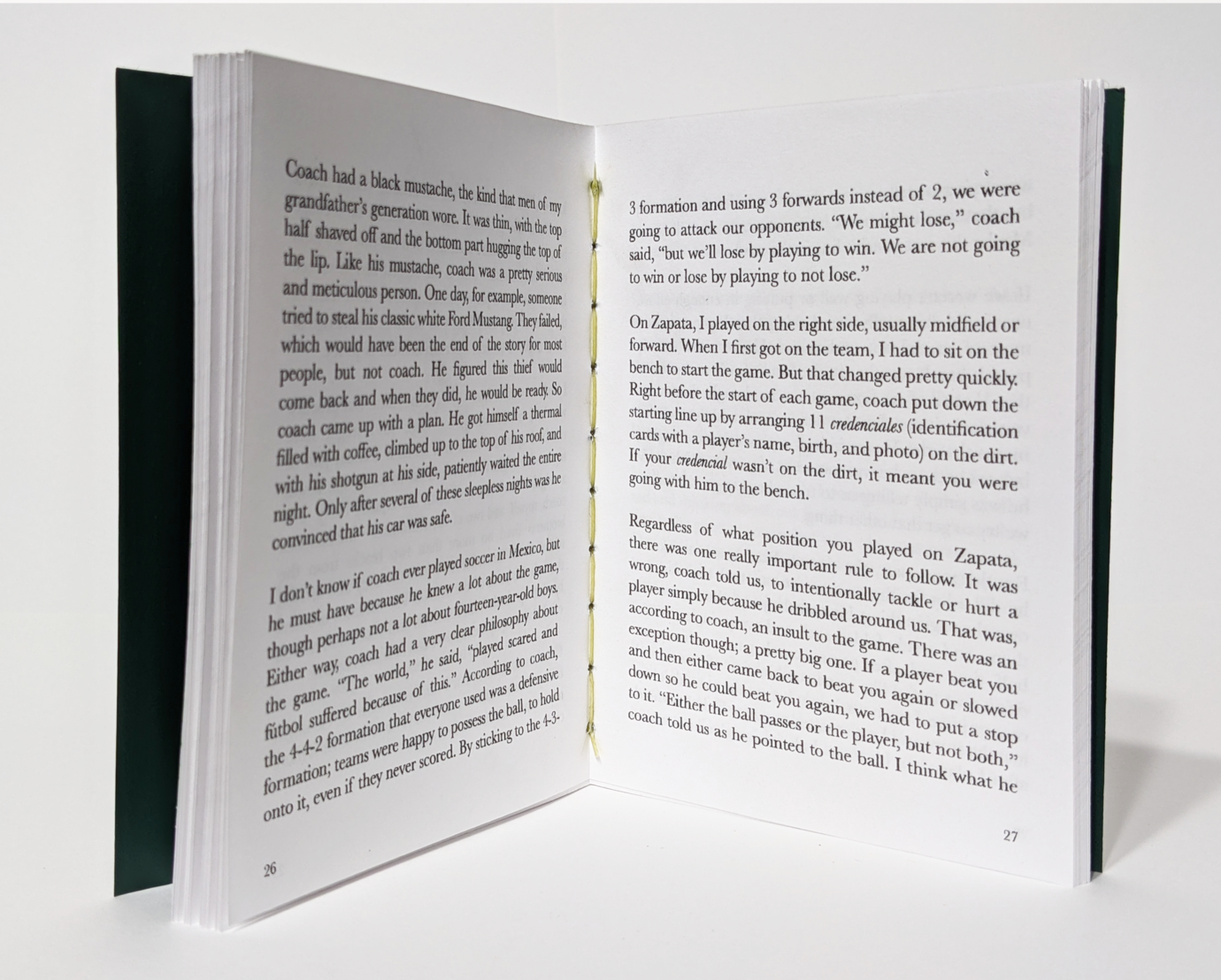
Author, historian and professor Romeo Guzmán offers the above bit of wisdom as the second introductory line to his latest publication: Pocho Blues. The chapbook is a short reflection of his own life as a Mexican-American raised in the US and in Mexico.
The body of work in literature and pop culture about & by Mexican-Americans is plenty and filled with successful and (too many!) unsuccessful portrayals of this particular diasporic group within the US. Perhaps it’s a sign of my age but I have grown accustomed to being let down by simplistic fables that boil down to the same lament of ní de aquí, ní de alla. I have reached a point where I physically brace myself before consuming any media related to the matter.
Pocho Blues fits into the successful side thanks to Guzmán’s creative talent as a writer and to his critical eye as a historian. He begins with the “ultimate source” that served as the catalyst for this work: the death of his grandfather in 2011 and the death of his father two years after. As the member of the family gifted with creative and academic muscles, he was tasked with providing the eulogies at both funerals.
It was this experience that sparked a desire to write stories that needed to be told. I think Pocho Blues tries to make sense of what it means to be a child of Mexican migrants and to provide a glimpse into a universe of Mexicans making their way through life on and off the soccer pitch.
Romeo Guzmán
These stories are collected in three chapters that run up to a short 48 pages, yet there is much that is said, shared and to be learned from in such a relatively short length.
The first story, “My Father’s Charrería, My Rodeo: A Paisa Journey” is centered on a belt buckle that belonged to Guzmán’s late father. The author claimed it as his own in his teens and concocted a romantic story of how his father rode his first bull to earn it. The truth of how he actually earned it came as a total surprise to Guzmán and it is this revelation that serves as a MacGuffin into an investigation of his family’s multiculturality via migration, the bracero program, rodeos and charrería.
Guzmán draws a thoughtful throughline from the horseback-riding colonists of Nueva España to the separate, but parallel, evolutions of the cowboy in Mexico and in the US, as represented by Vicente Fernandez and Clint Eastwood, to his father’s belt buckle, which he wore in many a failed attempt to fit in at numerous paisa parties.
The buckle, a mundane everyday object designed with a single specific utility, thus becomes a symbol of a “complex and nuanced narrative” linking Guzmán, his father, and his father’s father and their relationships with Mexico and the US.
Courtesy Sybil Press
Soccer takes center stage in the second and third stories, “Team Zapata” and “Lobo”. The former finds Guzmán pondering on his days playing soccer as a teen with a neighborhood team called Team Zapata, before joining Chino Spirit in a different city. He tried to juggle playing at both, but ultimately elected to leave Zapata for Spirit. The anecdotes are humorous but the story ends on crushing terms.
While still at Zapata, the unnamed coach shared the terrible news that a teammate would no longer be joining them because he was fatally hurt defending himself after being assaulted. Some time after leaving Zapata, Guzmán learned that the son of his former coach, who also played on the team, was arrested and locked up in jail “for doing something he wasn’t supposed to.” The specific details of both events are never divulged.
With the death of his father, Guzmán’s connection to coach was also lost, leaving him with many unanswered questions.
A story like this typically draws insight from the actions on the field to provide a moral lesson off it, but Guzmán finds it difficult to do so. Perhaps, sometimes there are no larger lessons or deeper meanings in the stories of our lives; only “what-ifs” and a lifetime to consider what happened and what could have been otherwise.
Courtesy Sybil Press
The final story is named after Guzmán’s uncle Manuel who received the nickname Lobo for some unknown reason. Without revealing too much, suffice it to say that the man is quite a character. A cousin of Guzmán refers to him as Don Quixote at one point. Funnily enough, the oddball uncle ends up playing soccer at a park with his nephews who have just been challenged to play against a team of older paisas.
Guzmán and his cousins put up a good fight in their expensive cleats and modern jerseys emblazoned with the names of their favorite European clubs, but end up losing by a wide margin to older men dressed in “erzat jerseys” and “cheap rubber cleats.” The paisas had something he and his diasporic family members didn’t: the paisa hustle, which he recognized in his late father and other immigrant Mexican/Latino working-class men.
Their effort on the pitch mirrored their daily life and everyday struggles. Our fathers, at one point, were migrants, and paisas, too. They’d played soccer and done their fair share of balling on Santa Barbara’s soccer fields. We inherited their skills, but on this occasion at least, we forgot to incorporate the paisa hustle.
Romero Guzmán, Pocho Blues
Guzmán ends the story unable to shake the thought that he and his cousins have “lost something along the way.” It is never revealed what that “something” is or could be and, as a diasporic Mexican-American myself, I would not be surprised if that something has remained elusive to this day.
Reading Pocho Blues reminded me of one of my favorite quotes from the late scholar Stuart Hall, who described himself as the product of two diasporas:
Cultural identity…is a matter of “becoming” as well as of “being.” It belongs to the future as much as of to the past. It is not something which already exists, transcending place, time, history and culture. Cultural identities come from somewhere, have histories. But like everything which is historical, they undergo constant transformation. Far from being eternally fixed in some essentialised past, they are subject to the continuous “‘play”‘ of history, culture and power. Far from being grounded in mere “‘recovery”‘ of the past, which is waiting to be found, and which when found, will secure our sense of ourselves into eternity, identities are the names we give to the different ways we are positioned by, and position ourselves within, the narratives of the past.
There is plenty of diasporic content that traps itself within an identity without a sense of becoming. Rigid notions of identity have consistently plagued Mexican-Americanness within a struggle of seemingly eternal displacement voiced in the aforementioned aphorism of ní de aquí, ní de alla (admittedly, something I’m guilty of repeating in the past). Within this trap, a diasporic Mexican is doomed to never be their whole self, doomed to be split, 50/50, between two nationalities, cultures and countries, or, worse, doomed to be shunned by both, forcing the subject into a life of eternal cultural exile.
It would be a mistake to ignore the events and conditions that led to this specific identity formation. There was, and still is, a constant “othering” based on class, ethnicity and race that brought us to this point and there is no lack of literature and content on this subject. But it’s also a mistake to remain mired in the swamp of conflict at the heart of this particular duality. To do so would be to ignore the complex and nuanced narratives that provide said identity with its past and disconnect it from the multiple positions of the present that can provide shape to its future.
Guzmán’s Pocho Blues is refreshing to read because it isn’t a conflict between here or there. It is an understanding of here and there. It is a reconciliation between and acceptance of both as simply “being.”
I have another story up at the California Healthcare Foundation’s blog! In this article, I spoke with a few representatives at AltaMed about their latest campaign, ¡Ándale! ¿Qué Esperas?, to vaccinate Latin Americans in California to protect them from Covid-19.
But vaccination events are just one of many elements of the public education campaign. Another consists of testimonials from people who survived serious cases of symptomatic COVID-19 and now advise unvaccinated people to get their shots. In one of the online video clips, Gloria Torres pleads, “If you love your family and want to continue living in this world, get vaccinated.”
Torres describes how she saw immediately that her son was sick with COVID-19, and that soon she was sick too — then her husband, then more family members. While they all recovered, Torres said that she has not yet regained her sense of smell.
AltaMed is targeting its educational efforts at eight California counties with significant Latinx populations: Los Angeles, Orange, and San Diego in the southern part of the state; Merced and Stanislaus in the Central Valley; and Alameda, Contra Costa, and Solano in the Bay Area.
My latest article is an interview with a few people from El Sol, a community health advocacy group based in San Bernardino county. The non-profit group has devoted resources to share information about Covid-19, vaccines, and more in the county’s Hispanic/Latin American population.
The workers at El Sol realize that the conversations around the pandemic aren’t limited to the virus or vaccines. This latest phase of their campaign is called “Time to Heal” and was produced in collaboration with the CDC. Along with the toolkit, El Sol’s website features moving testimonials from residents (PDF) who have been severely affected by the pandemic. The website offers a guide on coping with short- or long-term trauma (PDF) and tips on creating a self-care plan (PDF).
“We have lost everything — people, jobs, hope, and we have not had time to reflect on it,” Fajardo said. “Everything now is about the ending the pandemic and, as soon as we get this done, I’m pretty sure we’ll be having a lot of mental health–related issues. When we were doing ‘Time to Heal,’ I tried to get testimonials from people I know who have suffered a loss. People are not ready in terms of how to talk or how to heal. These discussions were painful for them, so I think it’s a good opportunity to bring awareness of it and how to talk about it.”
My latest story is available to read now at dot.LA. It’s about a joint project between California State University Los Angeles and the University of Southern California to digitize their respective archives of Mesoamerican and Spanish Colonial artifacts and photographs.
EXCERPT:
“We’re hoping to do some 3D printing on campus of some of the objects,” said Ramirez. “It’s supposed to be a teaching collection in many ways but, obviously, many of the artifacts are very delicate so we don’t want people accidentally dropping them. We’re hoping to 3D print some of them so that it’s feasible and students can actually handle some of them because we have a Mesoamerican Studies minor on our campus.”
The photography collection also includes nearly 10,000 images printed on 35mm slides. The images are dated from the 1950s to the 1980s and feature Mesoamerican objects held in museums in Italy, Spain, Germany, France, the US, and South America. Of these, Cunningham has digitized 4,500 of them.
Cunningham uses a different camera and process to digitize physical objects such as statues and jars. He uses a Phase One XF camera with a 100-megapixel Phase One IQ3 digital back. Normally, he shoots 32 images of each item from one of three angles for a total of 96 images to create a single 3D render of an object. The 3D render is processed using Agisoft Metashape.
“Lucha libre is something very dear and personal to all Mexicans,” continues Arau. “All of my work, be it music, animation, film or art, is about popular Mexican culture and lucha libre is one of the most visible things there is. Compare that with the culture here, the gringo culture, where a mask is usually something associated with terrorism, with sadomasochism. There’s no tradition behind it whereas in all of Mexico, the Indigenous communities use masks, all of the fiestas in every state utilize masks, there are museums dedicated to masks made of different materials. For us, masks are something very natural.”
The space features a store that sells custom lucha libre merchandise including apparel such as shirts, hats and leggings printed in-house at the Republic of Lucha Print Shop. There are small baskets filled with plastic-mold action figures of masked wrestlers. Two large, glass cases contain mannequin heads adorned with various wrestling masks worn in official matches by wrestlers such as Fenix, Penta, Psycho Clown, Tinieblas Jr., and others, all for sale. They also host the Lucha Movie Club most Saturdays each month when the rooftop is converted into an outdoor movie theater to screen classic lucha libre films, such as the ones featuring El Santo and Blue Demon, and more.
My latest for KCET is my interview with a half-dozen artists who are part of a new wave of souldies artists. Souldies, a.k.a. Chicano Soul, has a distinct flair and sound that’s also connected to a specific cultural context, which I write briefly about in the story.
The familial connection to the music and the culture is one shared by nearly all the artists involved in this resurgence of oldies music. Samano recalls his parents putting artists such as The Delfonics and Brenton Wood on heavy rotation during his childhood. Lane grew up on gospel and studied “the pillars of northern soul” while studying music in college. Garcia’s father had a record collection that included Smokey Robinson, Mary Wells and Brenton Wood plus dozens of doo-wop artists.
The same goes for Vicky Tafoya, founder and singer of Vicky Tafoya and the Big Beat, who grew up surrounded by the sounds of doo-wop, big band and Motown. As the youngest of 12 children, she inherited the vinyl records that each one of her siblings left behind as they moved out. She became completely enamored with the music and had a life-changing experience in 1989 when she joined The Doo-Wop Society of Southern California. It was there that she would spend years watching and even performing acapella doo-wop on the same stage as the artists she listened to obsessively at home: Vernon Green and The Medallions, The Teenagers, The Six Teens, The Chantelles and many other legendary artists.




 Afroxander (aka Iván Fernández)