A.Chal Infuses His Hypnotic R&B With His South American Roots

achal_anand_sheth

A.Chal (aka Alejandro Salazar) is a tall dude who cuts an imposing figure, filling every room he steps into with silent intensity. His voice carries as much weight as the booming bass he produces for his music, but he’s soft-spoken during our interview, rarely speaking above a murmur. There’s an interesting duality to his persona as a singer, rapper, producer and solo artist, which continues to evolve on his latest release, On Gaz.

On Gaz, A.Chal’s third release and first mixtape, arrived on June 2, four years after his debut EP Ballroom Riots and just one year after his first full-length album, Welcome to Gazi. On the latter release, the Peruvian-American artist was the self-aware party boy who sought self-reflection and self-critique after debaucherous nights out on the town. On this new release, which features appearances by French Montana and A$AP Nast, he confronts his feelings of guilt after his insecurities convinced him to destroy numerous personal relationships in the months leading up to the release of Welcome to Gazi.

A.Chal sharpened his skills as a songwriter while living in New York, but friends urged him to head west to Los Angeles. Since moving here, he’s been better able to find inspiration and outlet for his creativity, resulting in an album, a mixtape and songwriting credits for the likes of Rita Ora, Max Martin and Jennifer Lopez.

Read more at LA Weekly.
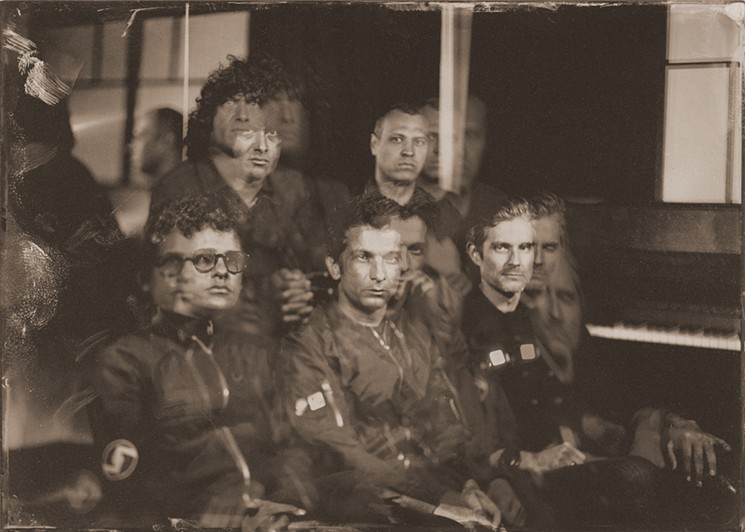
“You Gotta Let Us Be Humans”: Cedric Bixler-Zavala on At the Drive-In’s New Album

atdi_bandpic_hires1

Would you say it’s a political record or simply a reaction to the times?
I think it’s a reaction to the times. It’s done what I’ve always done. I’ve called myself the court jester of the band. I’ll give you a bunch of fucking riddles and they’re not always going to be so immediately-in-front-of-your-face. There’s going to be a lot of word associations, there’s going to be a lot of combinations of words that will paint images that will come back to haunt you later and [you’ll] go, “Maybe he means this or maybe he doesn’t mean that.”

To this day, I still think about what an “ecto-mimed bison” could be [from The Mars Volta’s “The Haunt of Roulette Dares”].
[Laughs] I mean, I can break that down for you, but it’d be so stupid! It’s the ghost of something extinct haunting you, you know? And now that I say that, like, why didn’t I just say it that way? No, I’m not going to say it that way! I’ve had a grip of art school teachers invalidate me as a kid. If I don’t say it like I say it, it’s like coloring within the lines.

When did the band decide to write new music? You were shutting down rumors until last January’s announcement about a new tour and new music.
We just wanted to make sure that it came out right, we wanted to make sure that everyone was down to do it, and we wanted to make sure that it didn’t come off half-cocked. It takes a lot of planning to do something that you hadn’t done together in 17 years. You’re figuring out if it can be done, you’re figuring out what does the band remember that they liked, what are we trying to say, what are we trying to do, and it takes time — since 2012 actually! Some of those songs from 2012 ended up on the record. It’s a human quality that people perceive which, naively and romantically, I think that’s what people like about the band. We’re not pushing spacebars and we’re not a Las Vegas act. If we have a bad show, you’re going to see it. If we have a bad song, you’re going to fucking hear it — but you gotta let us be humans.

Read more at LA Weekly Music.

Las Ligas Menores at Romano’s

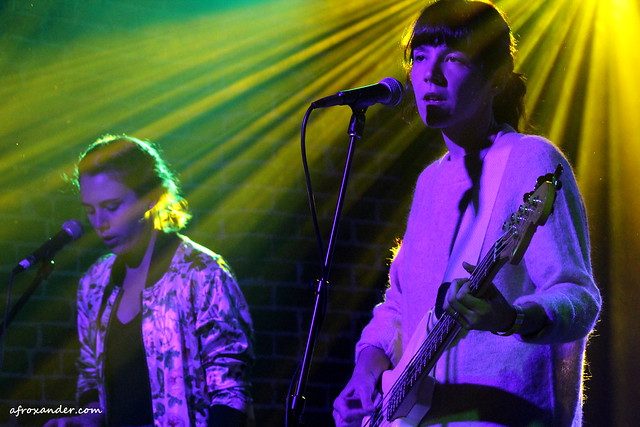
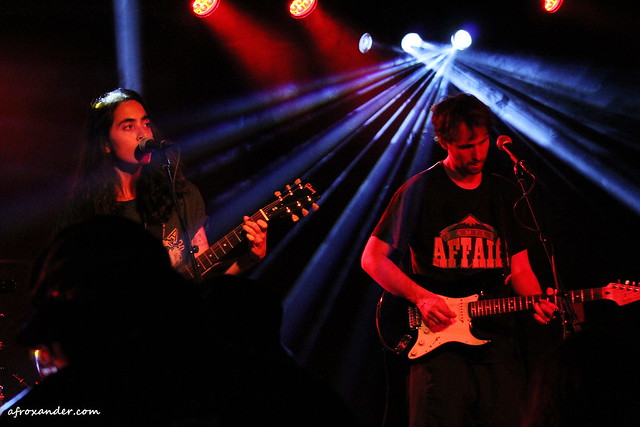
Las Ligas Menores (The Minor Leagues) are an Indie Rock group from Buenos Aires, Argentina who performed at the 2017 Coachella Valley Music & Arts Festival. The quintet performed at a few venues in the week between their weekend sets including this set at Romano’s in Riverside, CA where they opened for Quitapenas, who also made their Coachella festival debut this year.

ligas_menores_009

ligas_menores_002

ligas_menores_012

More at my Flickr.

Quetzal Urge Artists in the Era of Trump: “Say Something That Means Something”

quetzal-fred-knittel-smithsonian
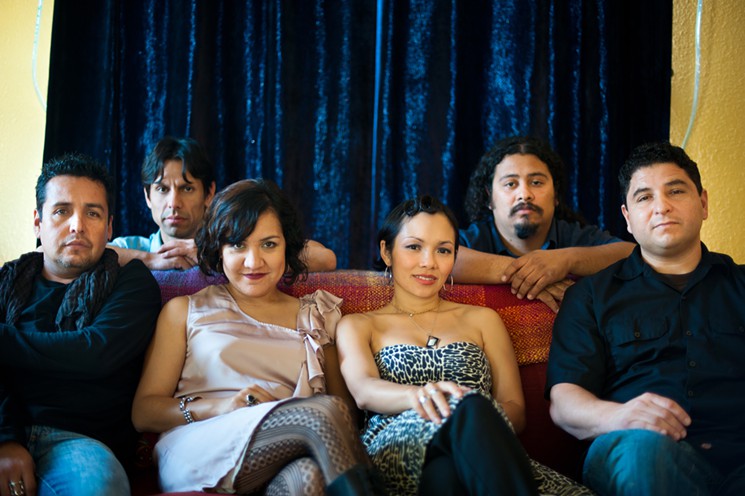
Quetzal (Fred Knittel/Smithsonian Folkways)

It’s been a little over two months now since President Trump took the oath of office. His first week in office saw numerous protests worldwide, with people of all backgrounds blocking highways in Los Angeles, anarchists punching trust-fund Nazis in the face, and millions of women marching in defense of their rights with the power of the knitted pussy hat.

The protests have dwindled since then (though anarchists punching Nazis is still a regular thing), which leaves one wondering: What comes next after the resistance and the protests? One possible answer lies in Quetzal’s latest album, The Eternal Getdown.

“It’s actually a line … on a song called ‘Critical Time’ (Tiempo Crítico),” explains Martha González of the album title. “It’s one of the lines toward the end of the song, which is: How do we initiate our people to get down? … [For] people who are involved in social justice and the struggle in general, how can we not lose momentum and initiate new people? Social movements aren’t just about putting out fliers but also about creating generative practices, things that also give us energy and don’t just take from us all the time. We’re fighting against something but also creating new things.”

Read more at LA Weekly.

For Venezuelan Rockers La Vida Bohème, La Lucha (“The Struggle”) Continues

la-vida-boheme-nacional-records
La Vida Boheme. Courtesy of Nacional Records.

Henry D’Arthenay sits in the living room of his new apartment in Mexico City, thousands of miles from his hometown of Caracas, Venezuela. We’re a few weeks shy of four years from when the singer-guitarist for Latin rock group La Vida Bohème spent two hours with me on Skype, explaining the massive protests in Caracas after an election placed the deceased Hugo Chavez’s chosen successor, Nicolás Maduro, in the presidential seat. Neither of us could have predicted then the upheaval he and his bandmates would endure in order to complete their latest album, La Lucha.

“It was like a month after we talked, actually. After we talked, everything changed!” he says, explaining the earth-shattering abruptness of it all with a snap of his fingers. Their homeland began its political deterioration with continued inflation and devaluation of the bolivar, international airlines abandoning the country, lower oil production and food shortages. The band made a last-minute decision to remain in Mexico City after their appearance at Vive Latino in 2014. D’Arthenay’s mother died in Caracas from cancer the following year.

“I really understand, now that we’re in Mexico City, how closed we were from everything else, from everyone and everything happening, because the country started to build a fence around itself,” he explains of life back home. “For me as a human being, returning to my country right now is not a possibility. For me to make a living there, there’s no future I can bring for myself there, and the only way I can bring a future for my country is by making my art.”

Continue reading at LA Weekly

How His Grandfather’s Death and Mexico City Inspired AJ Davila’s New Sound

img_8172
AJ Davila. Photo by Kristina Bakrevski

There comes a time when most every old punk decides to grow up, at least to some degree. Though AJ Dávila, the heavy-drinking, all-night-partying, cigarette-huffing former member of Puerto Rican garage-rock sensation Davila 666, hasn’t settled into a cubicle or swapped any of his favorite beers for cans of V8 and protein shakes, he is, as he tells it, looking forward to the future and working on his music in ways he hadn’t before.

“I named it The Future for a few reasons,” says Dávila of his upcoming third LP, El Futuro, speaking by phone from Mexico City where he’s lived for over two years now. “I write about my experience. Most of our experiences are heartbroken shit or fucked-up shit, you know, so I said to myself, ‘You always have to look toward the future.'”

Dávila’s new outlook on life and music beyond the “heartbroken” and “fucked up shit” didn’t arrive easily.  He was in the middle of touring the United States when he received a phone call from his mother. His grandfather, who Dávila was very close to, had passed away. Dávila’s mother, however, urged him to not end his tour to attend the funeral.

“My mother told me, ‘Don’t come to the funeral,” he recalls. “‘He wouldn’t want you to be here … to see him in a coffin. So don’t come, just go to the tours.'”

Head to LA Weekly to read the rest.

Girl School/Ruidosa Presents Heroína Latina

ruidosa

https://www.facebook.com/events/1015445788599616/

Ruidosa (“to make noise, to rumble, the agitators”), invites a bilingual and multi-cultural mix of mujeres musicians and culture makers and shapers to share their unique experiences of developing careers from such diverse spaces such as journalism, punk, ranchera, pop and alternative music. A conversation that explores the challenges of being a bilingual multicultural female artist and communicator in the world today, including issues such as identity, gender and music, art and content as a vehicle of change and transformation. Today more than ever in the US, is the moment to talk about being latina, feminista and proud.

En el contexto del festival GIRLSCHOOL 2017 de LA, Ruidosa tendrá un panel de conversación con un diverso grupo de mujeres artistas y creadoras/comunicadoras bilingues y multiculturales. Se explorarán los desafíos de navegar una carrera bilingue y multicultural hoy en Estados Unidos – incluyendo temas tales como identidad, género y música y arte como vehículo de cambio y transformación social.
Hoy, más que nunca, es el momento de activarse en USA.

Panelists:
Marty Preciado (editor Nylon en español) (Mex/LA)
Victoria La Mala (Artist) (Mex/LA)
Lido Pimienta (Artist) (Colombia/Toronto)
Alice Bag (Artist) (LA)
Moderated by Francisca Valenzuela (Artist/Ruidosa) (Chile/LA)

>> GIRLSCHOOL 2017
>> When: Saturday, January 28th.
>> Where Bootleg Theatre @ 12.30pm
>> Please be there @ 12.00 at the latest.

Bring Compelling LatAm Stories to World with ZZK Records

My friends at ZZK Records have been raising funds since October in order to fund new creative endeavors. They’re currently in the process of producing three documentary films about the new Latin American sound.

Here’s the first part of their first documentary, which is all about Ecuador:

They’re currently at the $12,000 mark of their $20,000 goal for ZZK Films to complete the three documentaries. For more info and to donate, click here.

For old time sake, here’s my interview with Grand Dull, co-founder of ZZK, for LA Weekly: Texas Dude Moves To Argentina and Launches a Latin Alternative Revolution

Rocky Dawuni and Afro Funké Celebrate the African Diaspora With Africa Rising

Rocky Dawuni by Bil Zelman

The too often-used tactic of describing a musician by comparing them to another musician of years past is typically a lazy maneuver that fails to properly individualize the modern artist from their legendary counterpart. However, there is plenty of merit in the repeated comparisons critics have made over the years between Bob Marley and Ghanian reggae/highlife artist Rocky Dawuni. Without the spark of Marley’s music that lit the creative fire within a young, impressionable Dawuni, there would be no Africa Rising.

Africa Rising is the conclusion of the Ford Summer Season at the Ford Theatres, a series of music, dance, theatre and film events scheduled from May through October. The final event at the venue will feature music by Dawuni with Ethiopian-influenced ensemble Wondem, led by multi-instrumentalist Dexter Story; Congolese-Belgian singer Marie Daulne of Zap Mama; and DJs Jeremy Sole and Glenn Red.

Read the rest of my story at LA Weekly.

Schools Not Prisons: Buyepongo and Ceci Bastida Rally Against Mass Incarceration

1-C90A7678.jpg

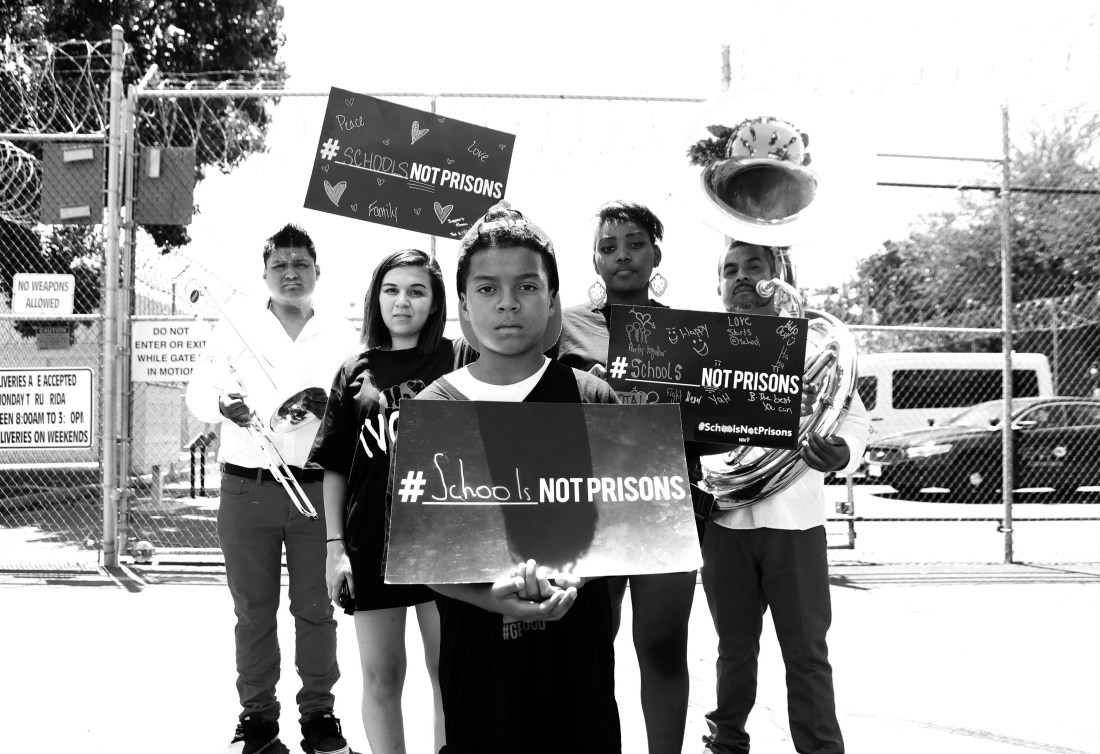
Singer-songwriter Ceci Bastida has long championed political and social causes such as immigrant rights, the Zapatista movement and various issues concerning her native country of Mexico. Her most recent foray into activism, however, is undoubtedly her most personal.

This Saturday in Oxnard, she will be one of a handful of artists to perform a free, all-ages show in support of the Schools Not Prisons Arts & Music Festival tour, which promotes safe communities via voting, political activism and non-violence among community youth, with a focus on funding schools and educational programs while fighting against “zero-tolerance” policing of students that ultimately funnels many of them into the United States’ massive prison system.

Read the rest of my story at LA Weekly.