This article was written for and published in the 2015 edition of the Coachella Valley Music Festival CAMP magazine. The magazine is distributed free of charge to all Coachella attendees. The text is reprinted here in its entirety as it appeared in the issue.
In the late 19th century, German philosopher Friedrich Nietzsche shared with the world his ideas developed around the concept of eternal recurrence, a.k.a. the eternal return, a thought experiment based on the cyclical view of time that originated in ancient Egypt and Indian philosophies.
In the early 21st century, a group from Los Angeles named Chicano Batman has–whether by fate, design, or mere happy coincidence–reshaped the idea of the eternal recurrence as an experience based on music: a “cycle of existential rhymes.”
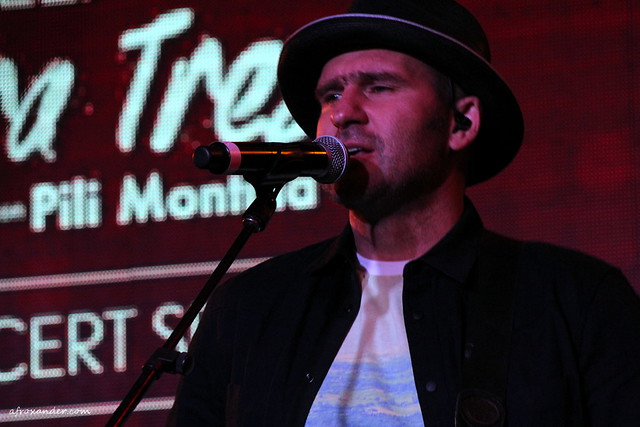
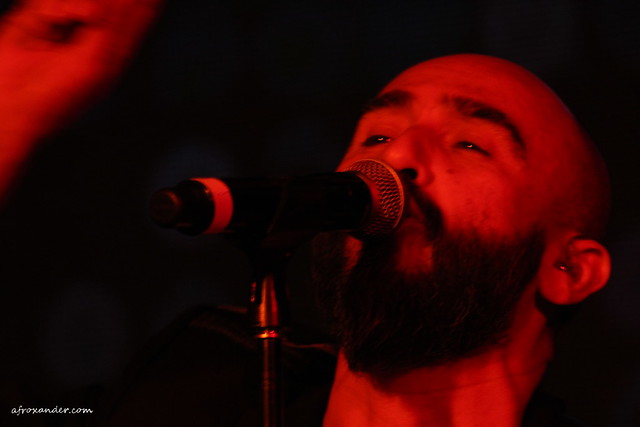
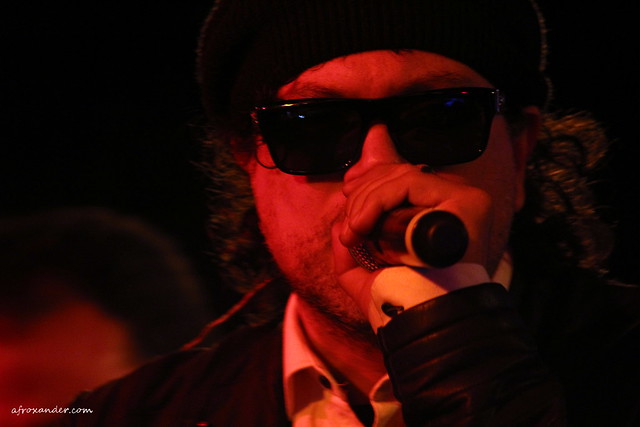
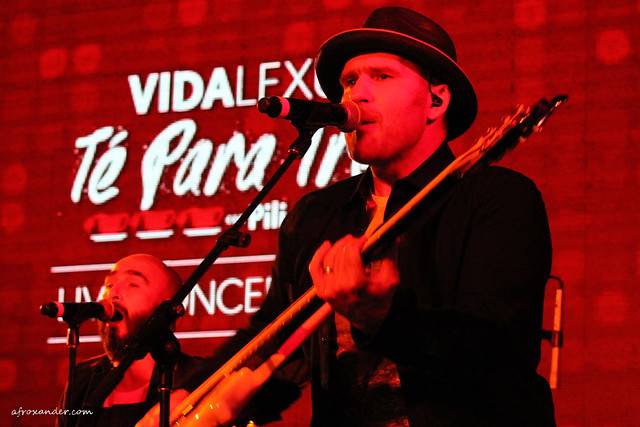
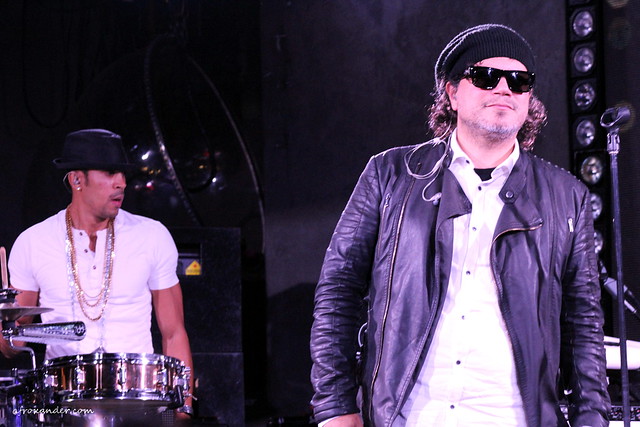
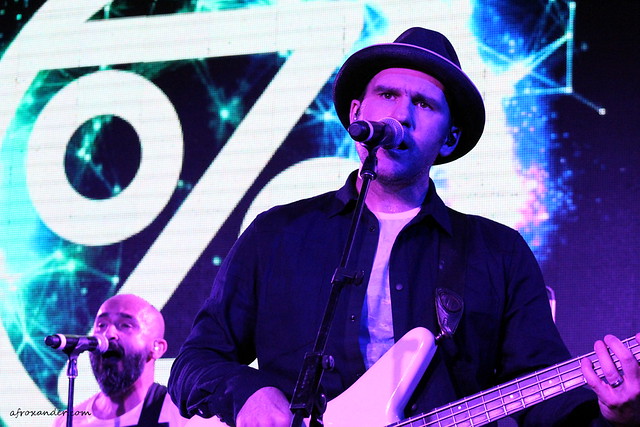
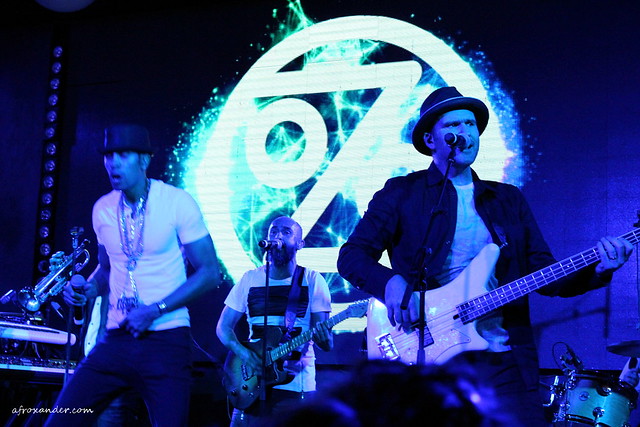
It’s a task these Latino musical übermensches have worked on since 2008, when singer/organist/guitarist Bardo Martinez, bassist/vocalist Eduardo Arenas, drummer Gabriel Villa, and (eventually) guitarist Carlos Arevalo came together to create music that throwbacks to a variety of classic Latino genres while remaining yet distinctly their own.
The band succeeds where many like-minded artists fail, in their ability to pull a unique sound out of their well-known and well-worn influences as Os Mutantes, Los Angeles Negros, Ritchie Valens, and a permeate mix of mid-20th century Latin soul, funk, oldies, rock, psychedelia, tropicalia, and cumbia.
As such, the question of “Who is Chicano Batman?” is a study in paradoxes. The band manages to be an homage to the past yet also absolutely original. Their music is the soundtrack to a romanticized ideal of the quintessential experience of life as a Latino in L.A., yet that same romanticism that can be felt and appreciated as a universal experience.
Chicano Batman’s most recent album, Cycles Of Existential Rhyme, embodies all of that.
The group’s second full-length release is an affectionate 14-song journey through their familial aural histories, as well as their own lived experiences. It is music seen through nostalgic filters, intended to resonate with the current generation as well as the one to come, in a continuous cycle–an eternal recurrence–of never-ending inspiration.
“For me, that’s what music is about” explains Martinez, “It’s about carrying the inspiration and trying to feel inspired at the same time.”
That loop is best summed up in the title track, in which Martinez sings of “the rhythm of our place and time in cycles of existential rhyme.” The wavy-haired crooner says his band creates the type of ’70s sounds their parents were dancing to in the prime of their youth. Both Martinez and Arenas have relatives who wrote and performed such music during that era, too. Arenas even plays the same type of bass one of his uncles once plucked.
So convincing is the mood of the music that one can envision an alternate universe where callers dedicate Chicano Batman songs such as “She Lives On My Block,” “A Hundred Dead And Loving Souls,” or “Itotiani” to their lovers on Art Laboe’s now-cancelled “Oldies But Goodies” radio show.
Still, though it evokes certain musical signposts thanks to the suggestive power of memory, in direct comparison their style matches none of the previously mentioned forms. And in that way, the music manages to be timeless, transcending the limits of labels and genre.
That organic formula proved to be successful among their hometown crowds.
Chicano Batman made an indelible mark on L.A.’s musical landscape with shows in Boyle Heights, Echo Park, downtown, and Hollywood in their early years. Their rise from backyard band to club staple to festival favorite has been steady.
The quartet performed at the Voodoo Music + Arts Experience in New Orleans in 2012, toured Japan in 2013, and most recently, opened for Jack White on a handful of U.S. shows.
That most recent tour thrust them further into the national spotlight, with mixed responses from audiences. Thankfully, the positives outweighed the negatives, as their music struck a chord with the right listeners at each stop. They were most surprised by the amazing receptions they received in states like Ohio and Oklahoma where the Latino population is scarce at best.
“The Norman, Oklahoma show was a big surprise,” says Arevalo. “The audience just ate it up. They understood it. It was the most interaction we got with any crowd–the biggest applause and the loudest screaming. It was a magical show.”
“That tour was the biggest task that the band has had,” adds Arenas. “We were all tense, but it was exciting! We had nothing to lose because we got to play for thousands of people. And if we got booed, who cares? At least we got to play for Jack White!”
Those tours were good practice for what would eventually come: a slot at a world-famous music festival in their own backyard, with a mix of hometown fans and international spectators.
It may verge on cliché to hear a Southern California artist to say that the opportunity to perform at Coachella is a dream come true, but the sentiment remains authentic. “I saw The Mars Volta play one of their first shows in 2002 at Coachella,” says Arevalo reminiscing on his first of many festival experiences. “They were still setting up their own equipment. They didn’t have roadies back then. I remember thinking, ‘One day I’m going to be on that stage.’ I didn’t think it would take this long, but better late than never.”
Chicano Batman is one of a handful of Latino groups scheduled to perform at the festival. Bay Area Hip-Hop duo Los Rakas, Tijuana legends Nortec Collective Presents Bostich & Fussible, Hard Rock outfit Antemasque, and Low End Theory alum The Gaslamp Killer (whose father hails from Mexico City) will also be on stage. Of this group, only Chicano Batman represents a melting pot of Latino cultures.
The members count three ethnicities–Mexican, Colombian, and Salvadoran–between the four of them, despite their name specifically referencing Mexican-Americans. Martinez, who is half-Mexican and Colombian, created the name nearly a decade before the band was even a consideration. He sketched a drawing of a Latino character dressed in a tanktop with a flannel shirt as a cape, and dubbed him Chicano Batman.
It wasn’t until the band released its self-titled debut album in 2010 that their Batman/United Farm Workers hybrid logo appeared, carrying with it as many political overtones as one wants to attach. The image of the Dark Knight vigilante fused onto the wings of the UFW eagle begs to be viewed from a number of social justice angles. The band, however, hasn’t pushed any overt agenda through its music the way that, say, Rage Against The Machine has.
“The whole way it came about was really random,” Martinez admits. “It was something I really identified with when I was in college–a separate entity within itself.”
That’s not to say that Chicano Batman hasn’t pulled a few politically influenced moves over the years. They performed a handful of shows across the southwestern United States under the banner of the “Outer City Limits Tour” last October. The title was a response to the lack of diversity in the lineups of music festivals like Austin City Limits, scheduled during the same month.
And in November, the quartet went north, to Oakland, to play the Benefit Concert for Migrant Children hosted by Chipsterlife and the Social Justice Collaborative. The latter is a non-profit that represents unaccompanied, undocumented minors in court.
Around that time, Chicano Batman suffered a loss, too–Isaiah “Ikey” Owens, keyboardist for White, The Mars Volta, and Free Moral Agents. Their longtime friend and fan passed away of a heart attack while on tour with White in Mexico. He had promised to produce the band’s next album. They’ve talked about releasing an EP dedicated to the late musician, and are currently working on that third LP.
“We have the material so we might as well do it,” says Arevalo. “I’m always a fan of more output sooner than later. It’s been a long time too with our first album in 2008 and the new one last year. I’m personally pushing to put stuff out every year whether it’s a 45′ or an album. That’s what it’s about anyway: making music.”
It remains to be seen whether or not the band will preview any new music at the festival. Either way, their presence at Coachella closes another cycle: that of the festival goers who evolved into festival performers, inspiring a new generation, all on the very same field.







 Afroxander (aka Iván Fernández)