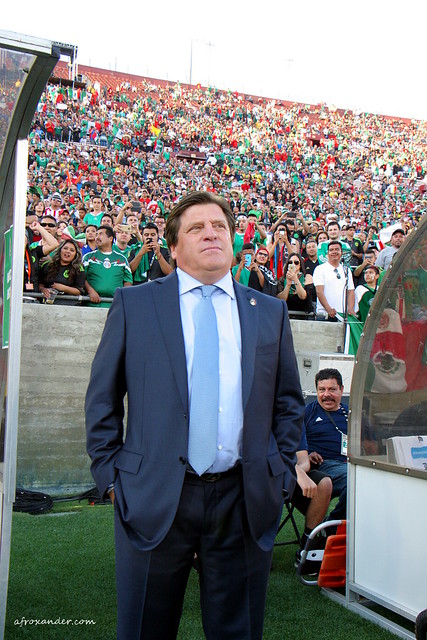
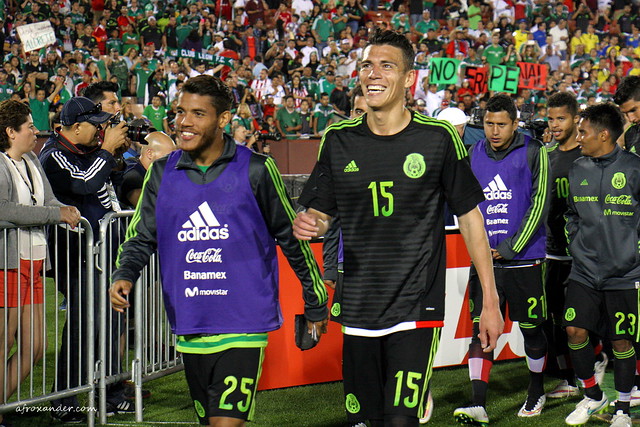
Mexico vs. USMNT 2015 CONCACAF Cup Photo MEGA-POST!!

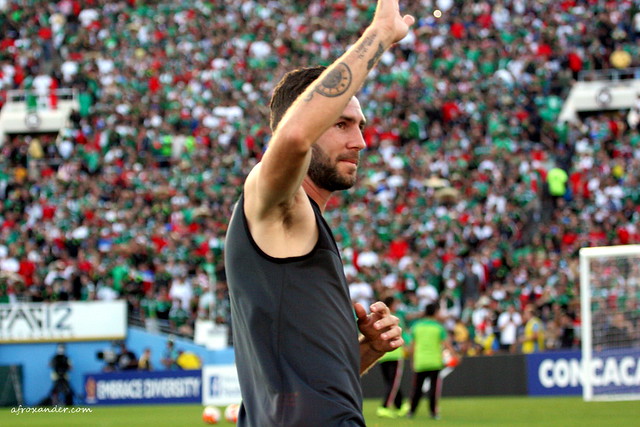
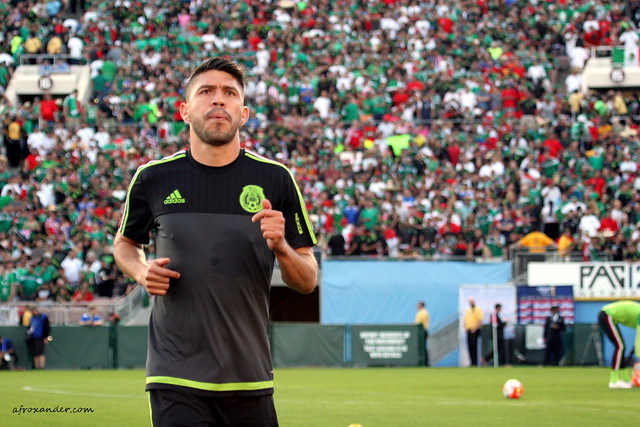
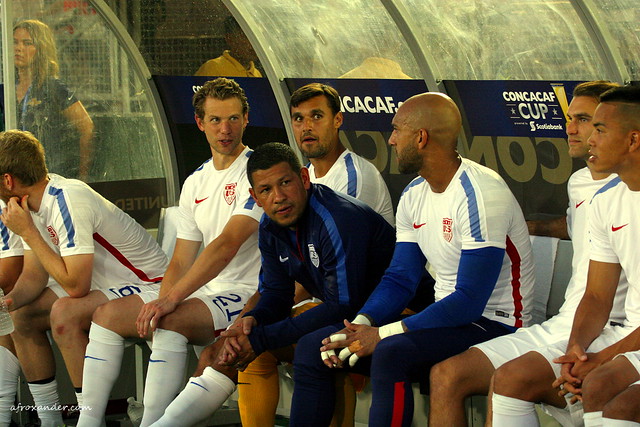
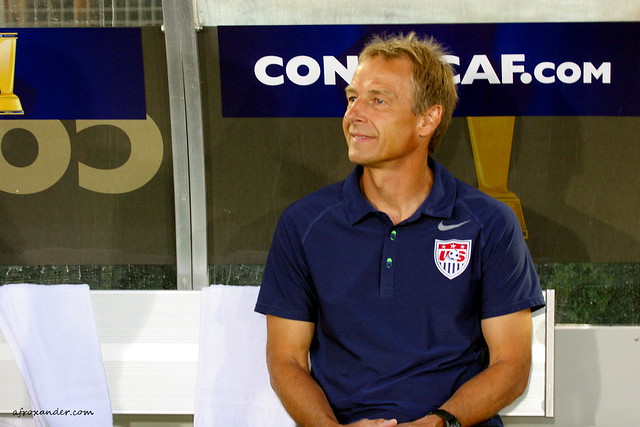
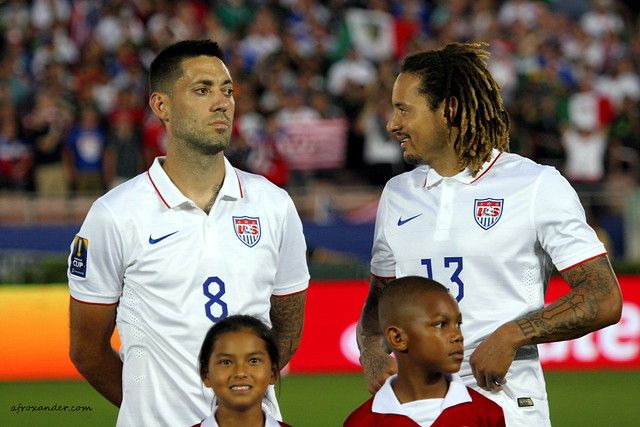
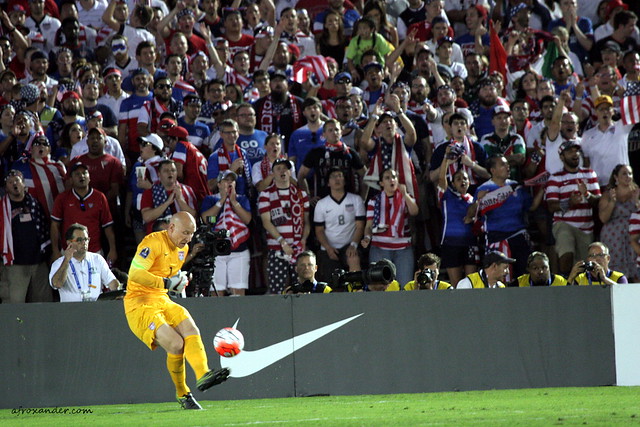
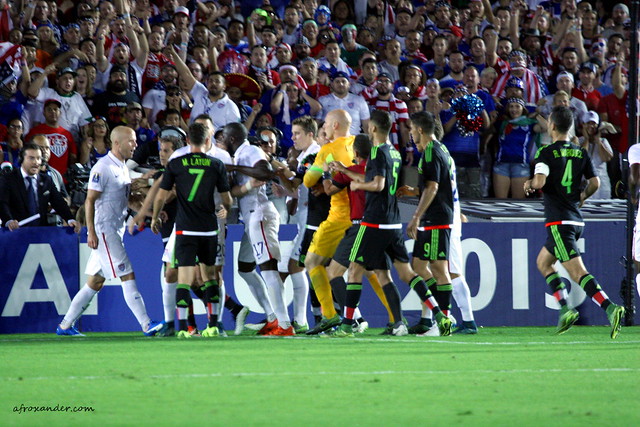
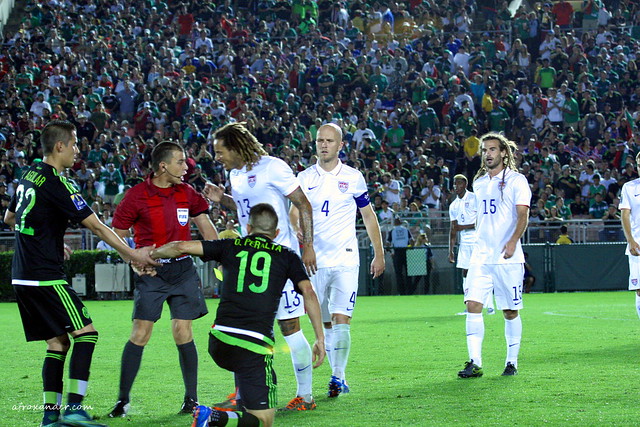
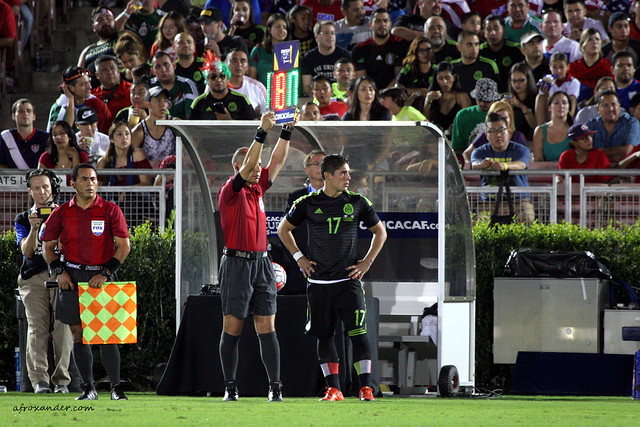
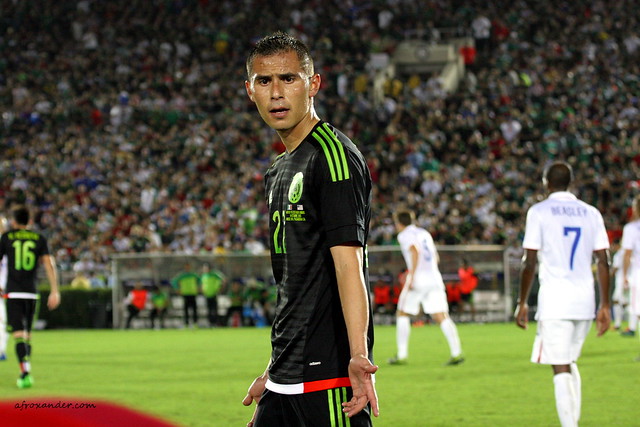
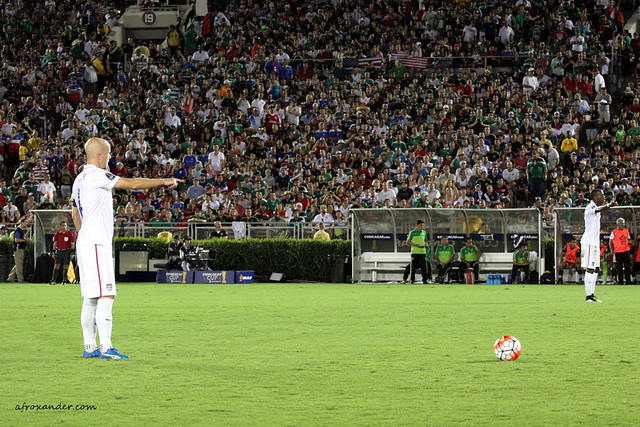
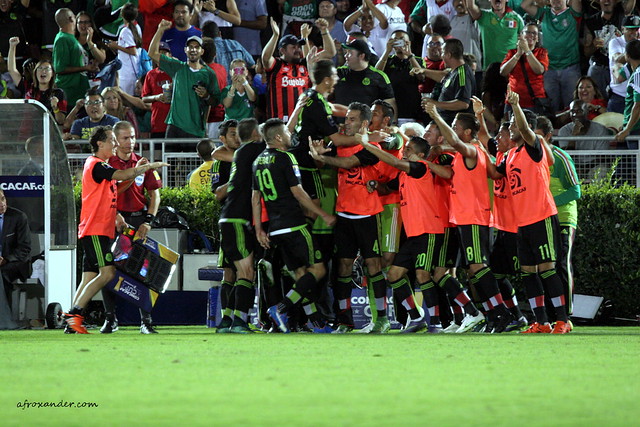
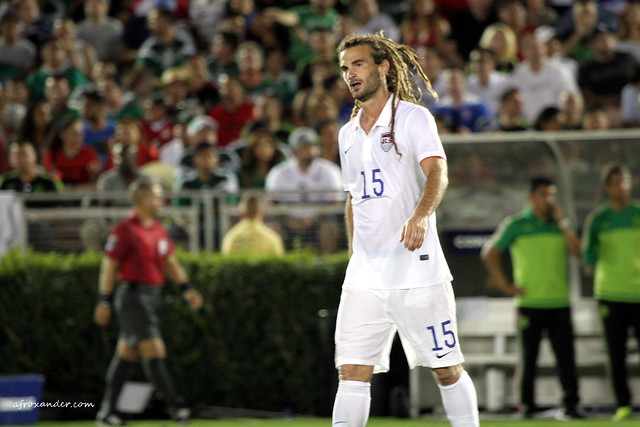
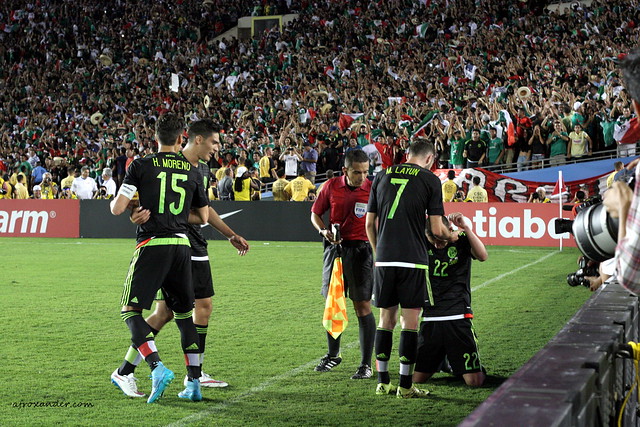
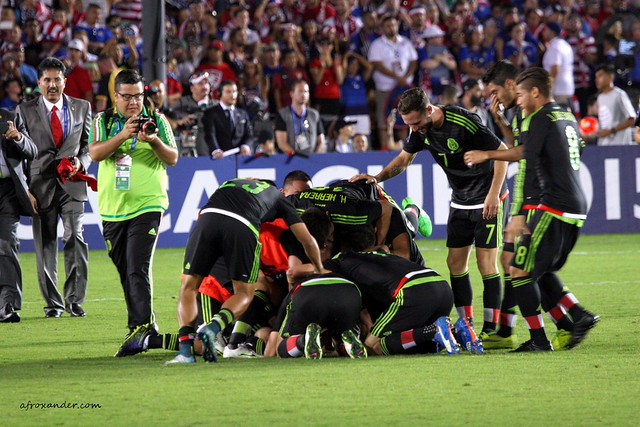
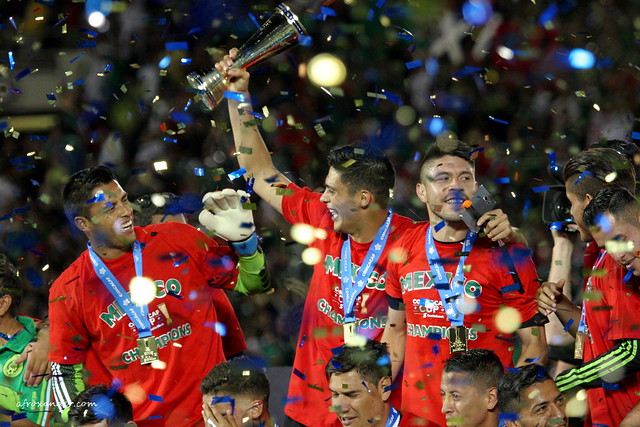
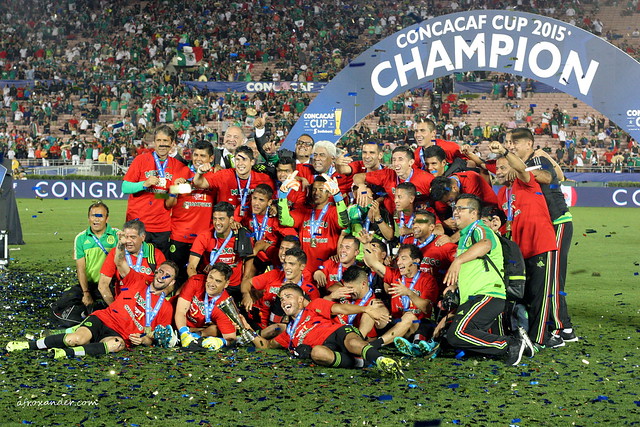
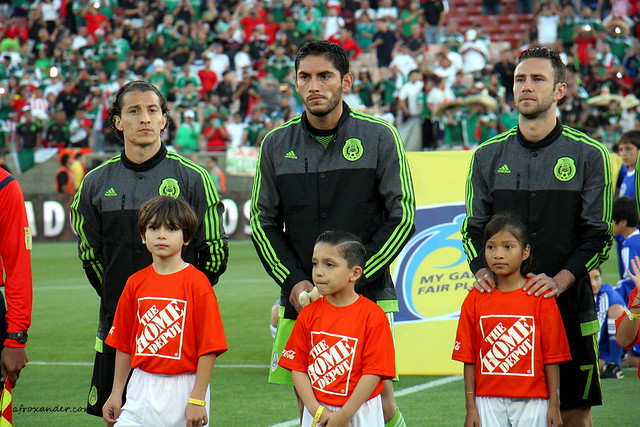
I am happy and very lucky to say that I photographed the Mexican national football team for the second time this year. This match, however, was more important than a friendly as Mexico faced off against their CONCACAF rival USMNT. At stake was the berth to represent CONCACAF at the FIFA Confederations Cup to be held in Russia 2017.

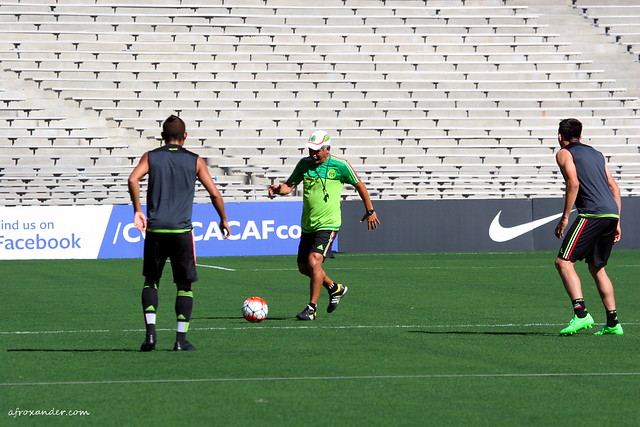
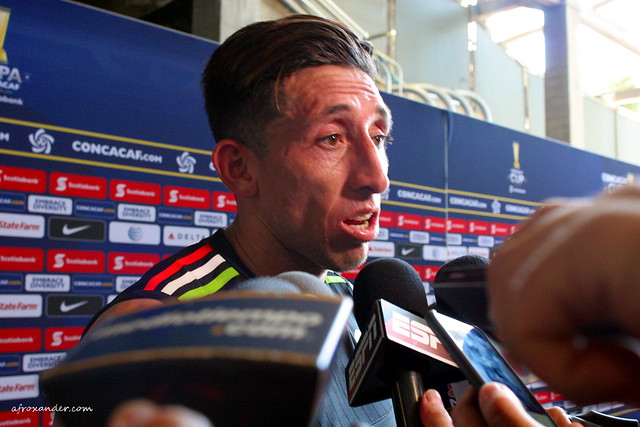
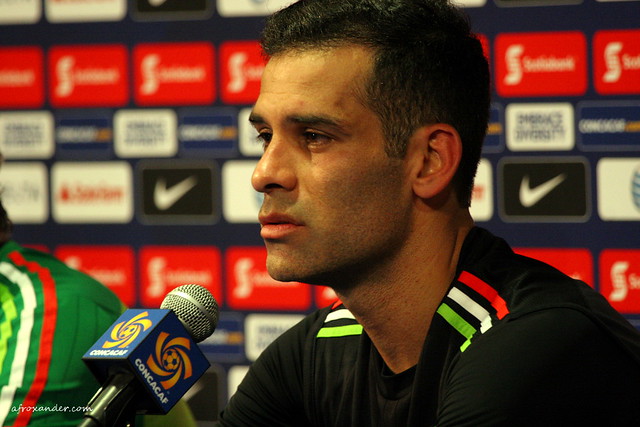
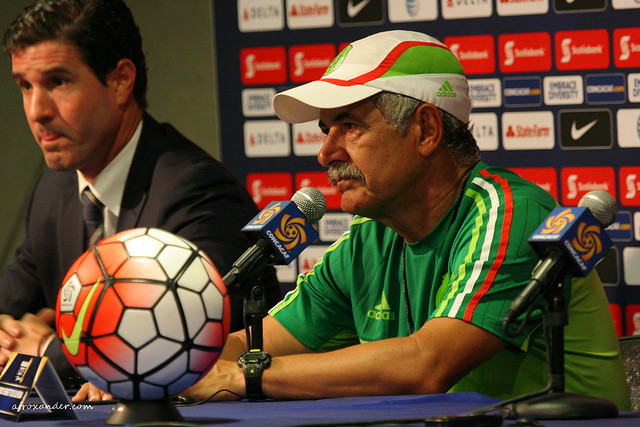
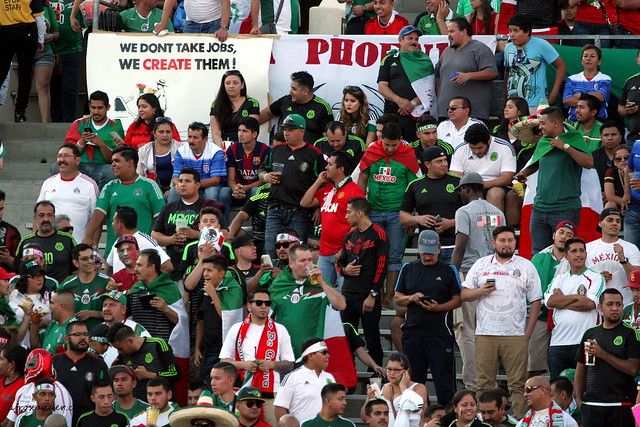
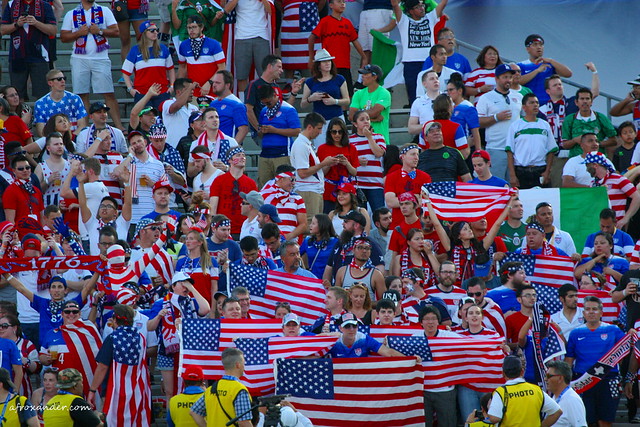
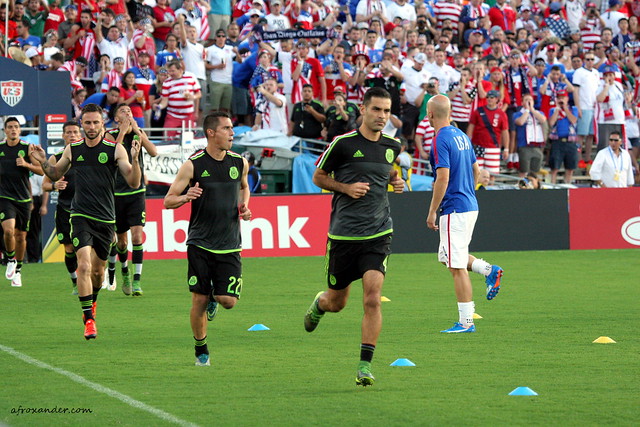
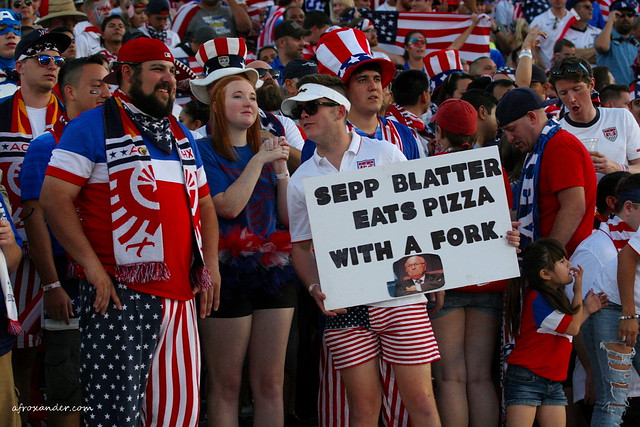
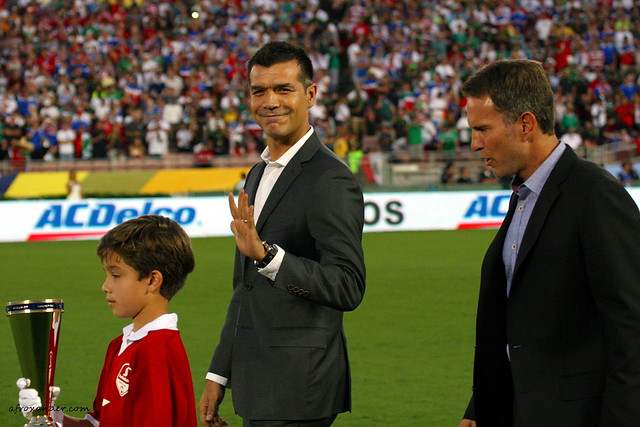
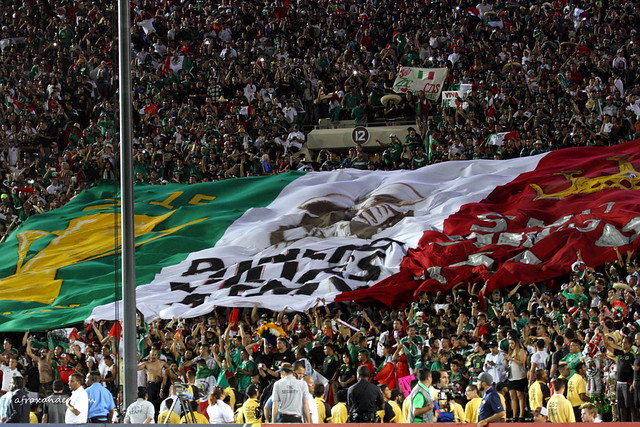
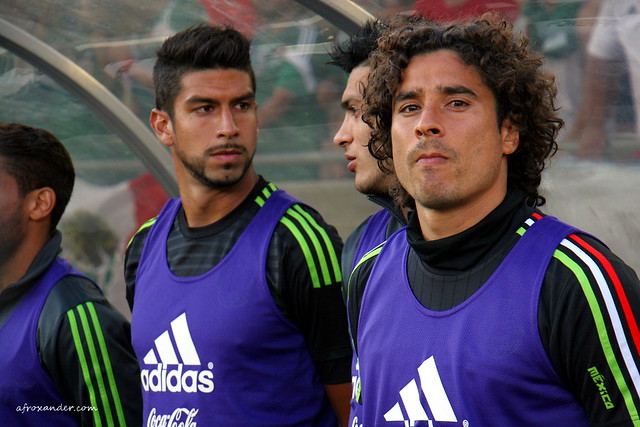
The weekend began with a visit to the Rose Bowl in Pasadena for pre-match day training photos and the press conference on Friday, Oct. 9th. Kickoff was at 6:30pm the following day at the same venue in front of a sold-out crowd of just under 94, 000 fans (75% Mex, 25% USA), many of which arrived nearly five hours earlier for the tailgate parties.

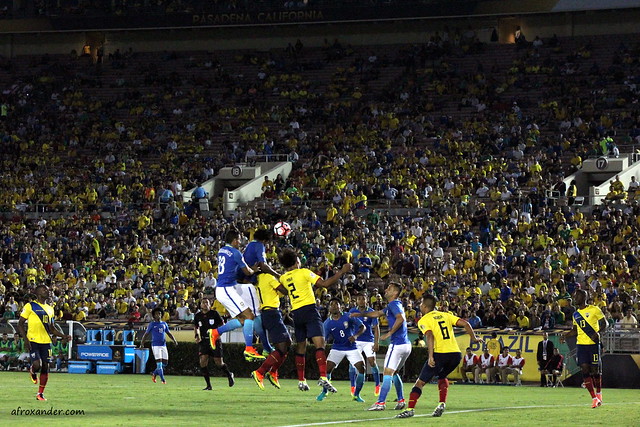
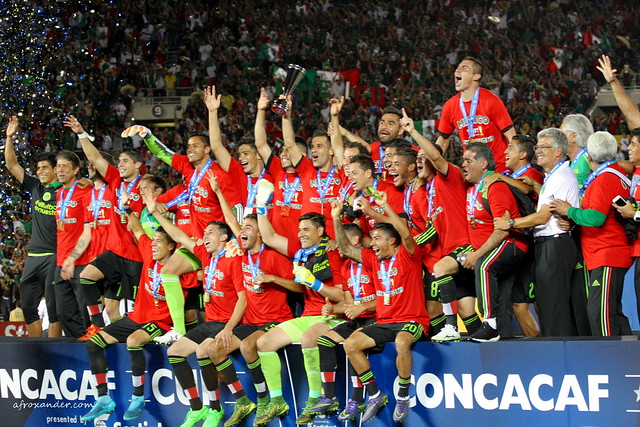
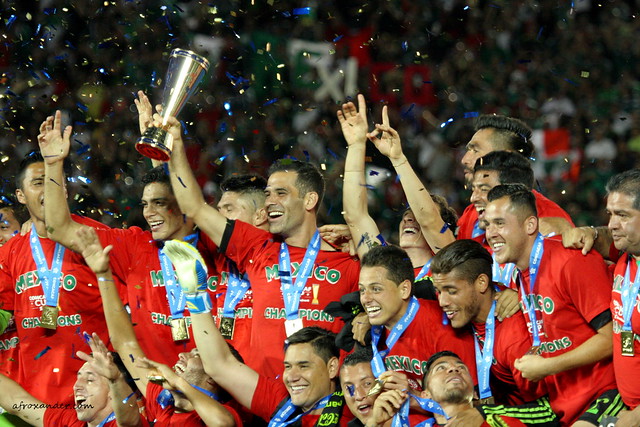
The atmosphere from both sets of fans was incredible and electrifying thanks to both teams providing an entertaining 120 minutes of football. In the end, Mexico sealed the victory at 3 – 2 thanks to a golazo from Paul Aguilar with two minutes left before penalties.

Complete photo album of pre-match day training & press conference for Mexico.

Complete photo album of CONCACAF Cup match day featuring USMNT (2) vs. Mexico (3).

A selection of photos from both albums is below. Enjoy!

Mexico’s pre-match day training and press conference at the Rose Bowl:

mex_training_004

mex_training_005

mex_training_009

mex_training_010

mex_training_012

mex_training_014

mex_training_016

mex_training_018

mex_training_019

Inaugural CONCACAF Cup match between Mexico and USMNT for CONCACAF’s spot at the Confederations Cup in Russia 2017:

mexico_usa_concacup_001

mexico_usa_concacup_002

mexico_usa_concacup_007

mexico_usa_concacup_012

mexico_usa_concacup_015

mexico_usa_concacup_018

mexico_usa_concacup_019

mexico_usa_concacup_021

mexico_usa_concacup_022

mexico_usa_concacup_025

mexico_usa_concacup_026

mexico_usa_concacup_029

mexico_usa_concacup_032

mexico_usa_concacup_038

mexico_usa_concacup_042

mexico_usa_concacup_045

mexico_usa_concacup_046

mexico_usa_concacup_051

mexico_usa_concacup_056

mexico_usa_concacup_059

mexico_usa_concacup_065

mexico_usa_concacup_066

mexico_usa_concacup_067

mexico_usa_concacup_068

mexico_usa_concacup_072

mexico_usa_concacup_074

mexico_usa_concacup_076

mexico_usa_concacup_079

mexico_usa_concacup_081

mexico_usa_concacup_082

mexico_usa_concacup_084

mexico_usa_concacup_087

mexico_usa_concacup_089

mexico_usa_concacup_091

mexico_usa_concacup_092

NY Cosmos COO Erik Stover Goes All In Against USSF, MLS

On August 31st, the Financial Times broke the story on the North American Soccer League’s (NASL) legal challenge to the United States Soccer Federation’s (USSF) proposed changes to Division 1 football requirements. The sport’s governing body’s attempt to change and increase the minimum criteria for a 1st division soccer league is an “anti-competitive bait and switch,” claimed attorney Jeffrey Kessler (he of DeflateGate fame) who is representing the NASL in the case.

This past weekend, Erik Stover, COO of NASL team New York Cosmos, doubled down on NASL’s legal challenge against the USSF. Schmidt was candid about a number of topics at a pre-game watch party Q&A session hosted by Jack Demsey’s before the team’s match against FC Edmonton. The hour-long session covered numerous topics including the state of the new Cosmos stadium, questions about the team roster, and, most importantly, his personal thoughts on the NASL’s legal challenge against the USSF.

Erik Stover, COO of New York Cosmos (empireofsoccer.com).

He also claimed that a recent story in the New York Times about NASL team Carolina Railhawks was placed by people at Major League Soccer (MLS) and the USSF as a means to further discredit the NASL in the American soccer market. The story focused on the arrests of the team’s owner, Aaron Davidson of Traffic Sports, who was one of many persons caught in the initial wave of arrests in this year’s FIFA scandal.

The hour-long session is available in its entirety at the bottom of the post courtesy of the Cosmos Country Podcast. I’ve gone ahead and transcribed the juicier bits about the NASL/USSF situation and the Railhawks/NYT story below as best as I could.

At the 13:45 mark:

Question from audience member: You’ve obviously seen the headlines with Bill Edwards having the pending lawsuit issues against him, we have issues with Carolina with, obviously, Traffic, this new owner in Atlanta, and then we’ve got the two new teams running the league. What are the prospects we can expect from this ownership in general running the league and resolving some of these unknown questions?

Stover: Very good question and it kind of goes into the whole anti-trust thing so why don’t we talk about that for a few minutes.

First, Bill Edwards. I’m not sure what’s real there, what’s not, how much trouble he’s in, how much trouble he’s not. I think it’s interesting that the Department of Justice is not involved in that case. That says a little bit about the validity of it but it doesn’t say everything. He’s done a tremendous job turning that team around. It was an embarrassment how it was run and, so, he’s a very real mover and shaker in the Tampa City *??* area and he makes things happen. So I certainly hope things settle down with whatever is going on with that lawsuit. Only time will tell with something like that and it’s interesting that that case, for a long time…he wasn’t involved in that suit so who knows what’s going on.

I think you’ll be hearing news on Atlanta very soon. Good news for me from my point of view. When I finish here, I’m going to Atlanta to the Board of Governor’s meeting in Atlanta. Monday, Tuesday, there should be several announcements coming out, out of that and if there are several cities in the running for expansion, there’s a resolution to Atlanta coming soon. If it’s not announced within the next week or two, it will be probably before the end of the season. There appears to be a solution for Atlanta.

The interesting thing with Carolina was that team was for sale with Traffic and almost sold well before any of this stuff happened and, ironically, it almost sold before they sold Ft. Lauderdale, so they were moving out of any interest in NASL well before any of this stuff happened. Obviously this FIFA stuff caught us off-guard.

Aaron Davidson, I’ve known him for a few years and thought he was the nicest guy in the world. I certainly never saw a bad side to him but, from what I’ve read, he appears to be very guilty. He was playing the game the way a lot of people, particularly people from South America, play the game: with kickbacks and envelopes and things. It’s unfortunate for him. Nice guy, nice family but he appears to have crossed the line.

Traffic was moving out of the league anyway. We were down to them only owning Carolina and that was for sale for almost a year. There is interest there. I don’t know if that deal is going to close soon. Who knows? I think it’s a nice little setup there where they are, the stadium, the stadium deal they have, the potential with colleges there. There’s a lot of potential there. Traffic, to be honest, has managed it well and managed it well for years. Curt Johnson’s a good president but his hands are tied. Hopefully they’ll get a new ownership in there with local ties and they can move forward. I think that’ll be decided within the next couple of months. I don’t think there’s any list *??* going anywhere but it would be good for everybody if they got a good owner in there. They have a good president, they have a good head coach, they just need some good leadership and a good front office.

Carolina Railhawks crest

At the 23:04 mark:

Stover: So, anti-trust! You’ve seen a couple of articles. I’m not really at liberty to discuss this too much, but one thing I can tell you is those articles only scratch the surface of our position.

Audience member: Our position, you said?

Stover: Yes, NASL’s position on what is fair market practice. In case you missed this, our lawyer is as good as they come. He doesn’t take cases that he thinks he has a chance of losing. Kessler beat the NFL with the Tom Brady-DeflateGate thing. Not a little bit. He whipped their ass. This guy is good. He has won cases like this before. He is one of the most renowned attorneys in this country and just putting his name on the letter that was sent to US Soccer, we know for a fact sent fear through people’s minds.

Again, I can’t really speak specifics to what is in the letter but the bottom line is from when we started, when the Cosmos joined the NASL, there’s been a clear pattern of moving the goals on us. That is something that the Department of Justice looks very negatively upon. We have very compelling evidence for that.

For example, the Premier League would not be 1st division under US Soccer rules because…not Watford…

Audience member: Bournemouth.

Stover: …Bournemouth stadium is below 15, 000. La Liga wouldn’t be 1st division because Eibar and one other stadium isn’t 15, 000. These rules that keep changing time zones and number of teams, the capacity of the stadiums, the size of the city…Athletic Bilbao wouldn’t be allowed into an American 1st division. It’s just crazy and it’s changed every year for three years!

It’s not so much that we’re making an argument that we’re 1st division right now. We’re saying “how can we ever be 1st division if you keep changing the rules? Your committee is made up of nine people from MLS, someone from the USL, three from the women’s league, and Bill Peterson [of NASL].” How can we have a fair opportunity to grow our business?

In any other business in this country…I have an iPhone. It’s not some other organization saying iPhone is 1st division and Samsung is 2nd division and everybody should buy an iPhone. That’s technically what’s happening in soccer at this point.

Where this goes, I don’t know. I’m not involved in the day-to-day discussions. I know that the NASL is very serious and sent a letter to US Soccer and there will be discussions in the near future.

It certainly means a lot for our league. We go to Cuba and the first sentence says “2nd division.” We go to El Salvador and it says “2nd division.” There’s no question that that label on us makes it harder to sell tickets. It makes it harder to sell sponsorships. It makes it harder to do anything we do as a soccer club.

We unfortunately lost to [the New York] Red Bull[s], even though we thought the game was closer than the scoreline indicated, but their players said after the game was “2nd division, 2nd division, 2nd division, 2nd division.” It’s clearly a mandate to try to knock us down and marginalize us.

Their coaches came into our locker room and said “there’s nobody in MLS that would play us like that, who would’ve come out with possession and carve us apart” the way we did. We just made two really bad mistakes, three really, and didn’t finish a couple chances. That very easily could’ve been a very flipped-around scoreline and they knew it. They said that to us. Then they go into the press conference and all they say is “2nd division, 2nd division” so, it’s obviously a tactic being used against us. If we don’t have promotion and relegation in this country, which we’d sign up for tomorrow, there are laws in this country that prevent you, prevent businesses, from trying to put other businesses out of business.

That is really the discussion that’s in front of us. I think it’s going to heat up pretty significantly. That article about Carolina that was in the New York Times, that was placed by MLS and US Soccer. They put that article in the paper, so that’s what we’re going to be dealing with. I know we’re ready for the fight.

FIFA Under Investigation By Switzerland, USA

Developing story

https://www.admin.ch/gov/en/start/documentation/media-releases.msg-id-57391.html

The Office of the Attorney General of Switzerland (OAG) has opened criminal proceedings against persons unknown on suspicion of criminal mismanagement and of money laundering in connection with the allocation of the 2018 and 2022 Football World Cups. In the course of said proceedings, electronic data and documents were seized today at FIFA’s head office in Zurich.

http://www.justice.gov/opa/pr/nine-fifa-officials-and-five-corporate-executives-indicted-racketeering-conspiracy-and

Nine FIFA Officials and Five Corporate Executives Indicted for Racketeering Conspiracy and Corruption

The Defendants Include Two Current FIFA Vice Presidents and the Current and Former Presidents of the Confederation of North, Central American and Caribbean Association Football (CONCACAF); Seven Defendants Arrested Overseas; Guilty Pleas for Four Individual Defendants and Two Corporate Defendants Also Unsealed

Why Piojo’s Summer Tournament Goalkeeper Choices Make Sense

mexico_ecuador_2015_011
Ochoa, right, on the bench against Ecuador, March 2015.

It’s unofficially official: goalkeeper Jesus “Chuy” Corona of Cruz Azul will guard Mexico’s goal during the Copa America tournament in June. Guillermo “Memo” Ochoa will do the same the following month for the Gold Cup tournament, which coach Miguel “Piojo” Herrera has prioritized as a must-win.

The selections make sense. Corona had a great game against Ecuador last month where he made a number of key saves including stopping a penalty kick in his team’s 1 -0 victory. Corona and Mexico will face Ecuador again in the C.A. group stage alongside Chile and Bolivia.

His regular spot in La Maquina’s starting XI guarantees he’ll be in fine form entering the tournament, which will be packed with World Cup-caliber CONMEBOL teams looking to win the Copa and its coveted 2017 Confederations Cup spot.

mexico_ecuador_2015_008
(l – r) Andres Guardado, Corona, Miguel Layun in the starting lineup against Ecuador, March 2015.

Meanwhile, Ochoa’s move to La Liga hasn’t turned out as promising as he and fans his had hoped. The keeper who stunned the planet with his breathtaking saves at the 2014 World Cup has spent much of his time with Malaga CF as its secondary keeper behind Idriss Kameni.

His spot in CONCACAF’s Gold Cup will give him a month between the end of La Liga and the start of the aforementioned tournament to train with his World Cup squadmates. That could help boost his morale given his current situation.

The tournament would also provide an avenue for Ochoa to regain any form he’s lost on Malaga’s bench. Mexico’s G.C. opposition is on a competitively lower level with El Tri set to face Trinidad & Tobago, Guatemala, and Cuba in the group stage. It’s a far cry from Corona taking on Chile, Ecuador, and possibly Brazil or Colombia later on.

Those early matches c/should help the keeper regain his footing and form in time for the next round of matches against tougher CONCACAF opposition (possibly Honduras, Costa Rica, and the USA).

Corona will get to show off his skills in South America against tough competition and Ochoa will rejoin his World Cup squad for an opportunity to show the world he hasn’t lost a step despite his role as a secondary goalie.

Photos From Mexico vs. Ecuador International Friendly Match

The national teams of Mexico and Ecuador met at the Los Angeles Memorial Coliseum on Saturday March 28th for an international friendly match. Mexico won the game 1 – 0 thanks to a goal by Javier “Chicharito” Hernandez, his 39th for the national team which moved him past Cuauhtemoc Blanco as Mexico’s second leading goal-scorer.

It goes without saying I attended and got some great photos in the process. The full album of photos is on my flickr. Below are some of my favorites from the event.

mexico_ecuador_2015_004

mexico_ecuador_2015_006

mexico_ecuador_2015_011

mexico_ecuador_2015_019

mexico_ecuador_2015_022

mexico_ecuador_2015_026

mexico_ecuador_2015_029

mexico_ecuador_2015_035

mexico_ecuador_2015_036

mexico_ecuador_2015_041

mexico_ecuador_2015_042

Free Agency & The Heart Of Major League Soccer

Major League Soccer’s 2015 season is set to kickoff in exactly two weeks but there’s a chance first kick will be delayed indefinitely. The league and the MLS Players Union are currently sitting with a federal mediator in order to update the Collective Bargaining Agreement (CBA) between the two, which expired at the end of January. Members of the MLSPU have threatened to go on strike if both sides are unable to reach an agreement.

Should we get to a point before the season where things and negotiations aren’t where they should be, we are ready to strike, and we are united as a group to make real progress in terms of the way players get treated in this league.

Michael Bradley, Toronto FC

I think at this point a strike is imminent if we don’t get what we want.

Brad Evans, Seattle Sounders

What the players want is free agency and they’re now at the point of putting the league and their careers on hold in order to get it, as the quotes from Bradley and Evans illustrate. MLS is a special type of beast in the soccer world (along with Australia) in that it’s a closed, single-entity system in which the league itself dictates everything. Teams aren’t owned and run separately but run by league “investor-operators.” As such, player contracts are also owned by the league and not individual teams.

Here’s how Mike Jarosi explains it:

Insiders, and the attorneys, call the MLS structure “the budget” and the players’ projected compensation “the budget number.”  This accurately reflects the compensation structure.  That is, MLS LLC determines (as part of the collective bargaining process) how much it will spend on player compensation, and allocates that amount for each investor/operator to assign to its players (I will not muddy this piece with the “designated player” structure).  MLS LLC then pays the players.

That’s only the tip of the iceberg. MLS’s structure dictates that all players are employees of the league and not the team they play for. As such, there are a number of rules and regulations in place that any foreign player would deem arcane and ridiculous.

Consider the case of Herculez Gomez who I wrote about last month in Remezcla:

Gómez cut his teeth in MLS up until 2009 when he left Sporting Kansas City (then the Kansas City Wizards) and the USA to sign with Puebla F.C. in Mexico following a dispute with then-coach Peter Vermes. Gomez has expressed a desire to return to MLS, but continues to be hindered by one important limitation: the fact that Kansas City controls his rights to play in the league under the right of first refusal. Gómez’ career in the US is at the mercy of a team he hasn’t played with in seven years.

His current situation is similar to that of Jean-Marc Bosman. Bosman’s career, however, took a very different and deeply influential turn as Scott Nicholls details in Prost Amerika:

Bosman was playing for Belgian club FC Liege when his contract ran out in 1990. He wanted to play for Dunkirk in France but in an effort to keep Bosman at Liege, the team slapped a huge and unrealistic transfer “fee” on his head, despite being out of contract. This ultimately deterred Dunkirk because they could not afford the transfer fee.

The case of Union Royale Belge des Sociétés de Football Association ASBL v Jean-Marc Bosman changed modern football. The member nations of the European Union (EU) had agreed on ‘free movement of labour’ as they strove towards a stronger economic union.

Bosman took the Belgian Football Federation to court for five years, claiming that as a citizen of the EU he could play wherever he wanted to because he should be allowed “freedom of movement” as any citizen in other occupations was guaranteed.

Every ruling was appealed, but in 1995 the European Court of Justice in Luxembourg ruled in Bosman’s favour. It was too late for Bosman, but the consequences of the case were much, much bigger regarding the development of world football.

Gomez is most likely not planning on taking MLS all the way to the Supreme Court anytime soon, if ever, especially since he’s been enjoying his time playing in his parent’s home country of Mexico. Bosman’s situation was also more complicated (he had to go to an international court, after all) but the basic idea, however, is similar. The MLSPU wants the league to incorporate free agency in order to give players the freedom to decide where to play with less restrictions and, thus, more control over their careers as players in the USA.

Free agency, however, would risk the very nature of the structure of MLS. Again, Mike Jarosi:

First, and simply put, free agency would just plain muck everything up:  payroll, workers’ compensation payments, application of individual state laws versus a centralized system, etc., etc.

Second, it would shift the player compensation financial liabilities — and the accounting of the same — to the investor/operators (technically, the LLC “Members”).  This, in turn, would affect the taxing structure and the revenue flowLimited liability companies can elect to be taxed on a “pass-through” basis, which is a huge advantage.

Third, MLS has enjoyed 20 years of slow, steady growth.  There are ways to increase player rights and compensation without free agency.  Free agency would put the league in a position to seriously risk repeat of the NASL — spending itself out of existence in an arms-race for over-the-hill foreign players.

Most importantly, if MLS continues to shift its structure to where it looks like a duck, walks like a duck, and quacks like a duck, it’s probably not a single-entity LLC.

That last paragraph is very important. The incorporation of free agency would radically redefine what type of entity and structure MLS is and would open the metaphorical floodgates for further radical changes that could be enforced by the courts.

Chase Woodruff elaborates on this further in Eight By Eight:

The league contends that free agency could lead to out-of-control salary costs and hinder its ability to compete on the global transfer market, but its real concerns likely have to do with the battle that began in a Boston courtroom nearly twenty years ago. Since the Fraser ruling, it’s grown increasingly difficult to view the league as a single, unified organism, and not what it really is: a league like any other, composed of various constituent parts with diverse and at times conflicting interests. Over the past decade, the number of MLS franchises has close to doubled and continues to grow. Most clubs play in slick new soccer-specific stadiums, command millions in kit sponsorships and other commercial deals, and compete to sign high-priced talent from overseas through the Designated Player system. And in addition to run-of-the-mill American billionaires like Robert Kraft and Stan Kroenke, its “investor-operators” now include an Austrian energy drink company, a Brazilian venture capitalist, an Italian-Canadian dairy magnate, and the Abu Dhabi Royal Family.

Throw in free agency, with clubs bidding against one another for talent on the open market, and it becomes nearly impossible to consider MLS a single-entity. In the event of future antitrust litigation, the league’s single-entity defense might fall apart, and MLS players would gain the additional leverage of the so-called “nuclear option” to decertify their union and sue the league in court. Even other leagues, like the ambitious NASL, might sense an opportunity to follow in the footsteps of baseball’s Federal League and challenge MLS’ division-one status with an antitrust lawsuit.

There you have it. At stake here are the rights of US players to dictate their own careers clashing with the very structure at the core of MLS. But what are the odds of changes happening this year? The MLSPU has demanded free agency in the past but acquiesced for less, such as in 2010 when the league and the union agreed on the Re-Entry Draft and a number of other changes and improvements.

Noah Davis sees history repeating itself in favor of the league. From his piece in Grantland:

Still, if a players’ union was ever going to prevail against management, it seems like it should be the MLSPU in 2015. But it’s not likely to happen. Whether you talk to sources around the league or just think about the situation, you arrive at the same conclusion: Kraft needs MLS to play this season a lot less desperately than your average MLS player does. If MLS ceased to exist tomorrow, the owners would be disappointed. Portland Timbers owner Merritt Paulson would have to find someone else to get into Twitter fights with, but he would be just fine. The vast majority of the 500-plus players in the league, however, wouldn’t. They’d be out of jobs, unable to go to Europe or Mexico or anywhere else to play soccer professionally because they aren’t good enough or because those rosters are already settled.

The proposed strike also comes during a huge year for the league and the national team.  The Gold Cup tournament will take place this summer, MLS will debut two new teams (Orlando City and NYCFC), and the league signed some very hefty TV contracts with ESPN and FOX Sports.

It’s impossible to know what will happen come March 6th, but if history does repeat itself, both sides will repeat the negotiation process of 2010 when the league and MLSPU arrived at a consensus two days before first kick. The MLSPU didn’t win free agency then but did win a number of concessions that gave them a bit more freedom.

The MLSPU will need its own Bosman ruling to eventually win this fight. Unfortunately for the players and the union, a ruling like that probably won’t happen for many years and many more CBA negotiations to come.

Delantero Sin Equipo: The Embarrassing Saga of Alan Pulido

Alan Pulido
Alan Pulido

There are easy ways and difficult ways for a football player to cut his teeth and cleats in Europe. Mexican forward Alan Pulido has chosen, to quote the ancient knight from Indiana Jones and The Last Crusade, quite “poorly” and has now placed his “current” club Levadiakos FC against his “former” club Tigres UANL in a legal battle over his contract.
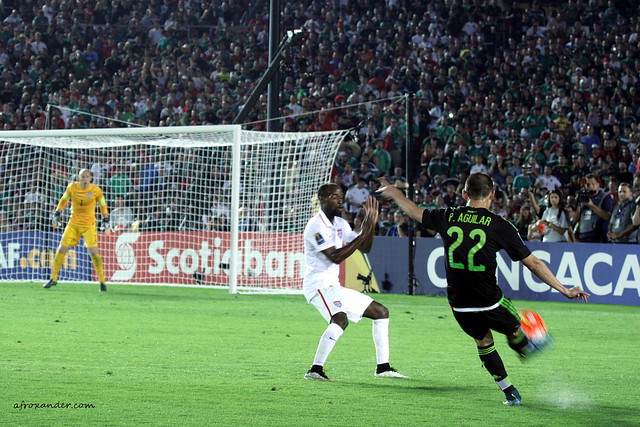
At the heart of the matter, is Pulido who has claimed free agency since his return to Mexico from the World Cup in Brazil (as one of the substitutes.) The drama began on July 31st, 2014, when Pulido released a public statement that claimed he was no longer a player at Tigres and was actually a free agent. The announcement arrived days after he skipped a number of training sessions with the team. On August 6th, Tigres president Alejandro Rodriguez claimed/clarified that Pulido’s contract is binding until June 30th, 2016.

READ THE REST AT REMEZCLA