50 Years of Coras USA

My latest article for KCET is available to read and enjoy. It’s a deep dive into Coras USA, aka Coras de Los Angeles, a local soccer team that existed for 50 years in southern California. The team was a cultural umbilical cord for Mexicans in Mexico and the US and later became a gateway for young players hoping to become professionals.

What began as a fun ritual for the weekend grew into a family legacy of community-building that lasted half a century. During its existence, Coras USA united working-class, immigrant families from Nayarit and other regions of Mexico in Los Angeles and provided youth players a pathway towards a professional career during its final years in the city of Riverside.

“Its original name is Deportivo Coras USA,” explained Lopez of the team founded by his father and uncles. “The first name that it had was Coras de Los Angeles. Along the years, it had a couple of name changes like Deportivo Nayarit [and] Deportivo Coras Nayarit. It’s always been Coras but it’s been known for Coras de Los Angeles because it branched out of Coras de Tepic.”

Read the story in full here: https://www.kcet.org/arts-culture/50-years-of-coras-usa-how-two-generations-built-community-with-soccer
The So Cal Roots of Brooklyn’s Daptone Records

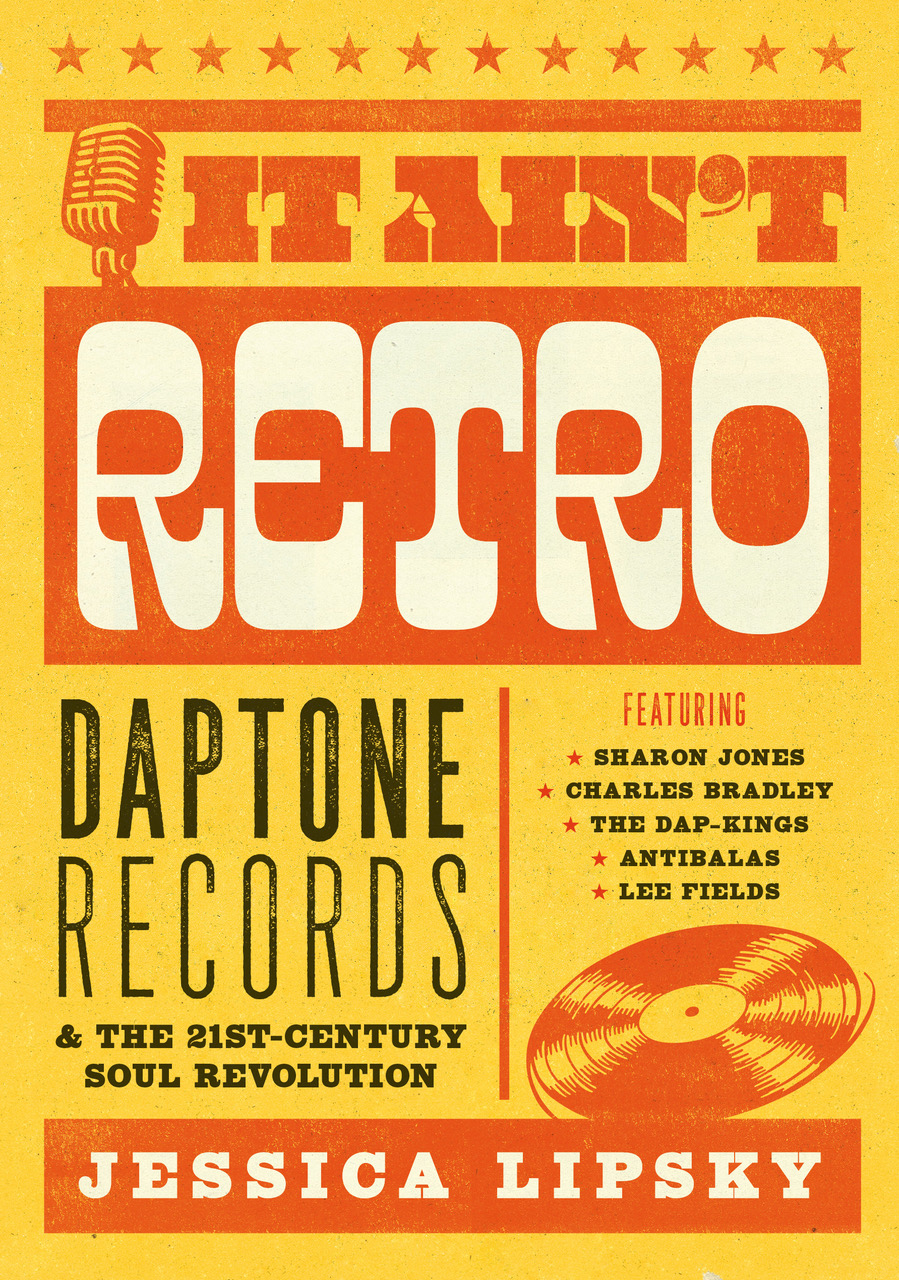
My latest story for KCET‘s Artbound is now online for your reading pleasure! In it, I interview Jessica Lipsky, author of “It Ain’t Retro: Daptone Records & The 21st-Century Soul Revolution.”

Link: https://www.kcet.org/shows/artbound/southern-californias-role-in-soul-musics-major-revival

Excerpt:

The artists at Daptone, such as Sharon Jones & The Dap-Kings, Antibalas, Charles Bradley, Menahan Street Band and The Sugarman 3, to name but a few, were at the tip of a steadily rising wave of a new generation of soul artists. The Dap-Kings even found themselves working for a time for the late Amy Winehouse. They recorded most of “Back to Black” with her and producer Mark Ronson in the studio and performed with her as her stage band on many occasions.

The stature of an artist like Winehouse coupled with the general misunderstanding of soul music as a product of a bygone era provided Lipsky with some challenges when she set out to write “It Ain’t Retro.” She initially wrote the book as a scene study of soul music but had a difficult time selling it to a publisher.

“After working on that for some time, it turns out it was too broad and too niche,” she explains by phone. “No one wanted to buy it and I had to pivot. A lot of the time, the people that are making these editorial decisions, be it in publishing or in journalism, this really isn’t their bag. Soul music is Motown and it’s oldies and that’s pretty much it. Then there was Amy Winehouse and that’s pretty much it. My experience was that a lot of folks didn’t really think that there is a market for telling these stories.”

You can purchase the book here: http://jawbonepress.com/it-aint-retro/

A New Wave of Souldies Artists

My latest for KCET is my interview with a half-dozen artists who are part of a new wave of souldies artists. Souldies, a.k.a. Chicano Soul, has a distinct flair and sound that’s also connected to a specific cultural context, which I write briefly about in the story.

The familial connection to the music and the culture is one shared by nearly all the artists involved in this resurgence of oldies music. Samano recalls his parents putting artists such as The Delfonics and Brenton Wood on heavy rotation during his childhood. Lane grew up on gospel and studied “the pillars of northern soul” while studying music in college. Garcia’s father had a record collection that included Smokey Robinson, Mary Wells and Brenton Wood plus dozens of doo-wop artists.

The same goes for Vicky Tafoya, founder and singer of Vicky Tafoya and the Big Beat, who grew up surrounded by the sounds of doo-wop, big band and Motown. As the youngest of 12 children, she inherited the vinyl records that each one of her siblings left behind as they moved out. She became completely enamored with the music and had a life-changing experience in 1989 when she joined The Doo-Wop Society of Southern California. It was there that she would spend years watching and even performing acapella doo-wop on the same stage as the artists she listened to obsessively at home: Vernon Green and The Medallions, The Teenagers, The Six Teens, The Chantelles and many other legendary artists.

You can read the story in full here: https://www.kcet.org/shows/artbound/a-new-generation-of-musicians-are-revitalizing-chicano-soul-music

Life As Undocuqueer

My latest piece for KCET Artbound is my interview with artist/activist Julio Salgado. His work took off nearly a decade ago when he created his series of portraits of queer, undocumented activists titled “Undocuqueer.”

An excerpt:

The purpose behind the series is to remind people that the bulk of the work in pushing the national conversation on immigrants’ rights, in planning and executing protests and all the other unglamorous, behind-the-scenes work was done by UndocuQueers. It’s also to expand the conversation behind the perceptions of who these immigrants affected by these laws and policies are.

On multiple occasions, Salgado has had to educate numerous people about the diversity of people who identify/are labeled as undocumented. In one such instance, he and others traveled by bus from California to Washington D.C. for a massive march on the capitol.

“A lot of them were faith-based groups,” recalls Salgado. “There were some immigrants who were very homophobic that would say homophobic things and, like, how do you navigate those spaces? You have to educate people, which I don’t have a problem with that. Working in kitchens with a lot of immigrant men and their machismo, you learn how to use humor.”

“That’s why I started making those pieces,” he continues. “It was for our communities to understand that if we’re talking about accepting people or creating policy that doesn’t criminalize us, we can think about other folks who are also part of our communities.”

Read the full story here: https://www.kcet.org/shows/artbound/julio-salgado-undocuqueer-immigrant-artist

Artist’s Community Orchestra Project Needs No Experience, Camera or Mic to Make Calming Melodies

I have a new article up at KCET about a collaborative music project that I also partook in. The project by Joshua-Michéle Ross is titled The Adjacent Possible: An Evolving Communal Orchestra and is a collaborative work of art between anonymous collaborators that, as I explain in the story, is an “experience [that] feels like equal doses of guided meditation, creative collaboration and a space for introspection and relaxation.”

From my article:

The project’s name comes from the work of Stuart Kauffman, a doctor, theoretical biologist and complex systems researcher, who coined the phrase “adjacent possible” in 2002. His theory is based on his work in biological evolution and is concerned with how organisms and biological systems, which he also refers to as “autonomous agents,” evolve into larger, more complex systems/organisms by seeking out numerous possibilities within their environment. His theory has been adapted in other fields, including the arts.

For Ross, the theory describes “how human beings, as parts of a very creative universe, are always pushing at the boundaries of what’s possible and how the aggregate choices that we make from that creates the kind of world we live in. It’s kind of how the future gets made and the idea of how the small choices that we make and bring to things, despite constraints, how those choices add up the reality we live in.”

Ross brings this theory to life through a communal orchestra. Up to 20 people gather to perform at each event. Ross serves as the event guide and conductor, speaking slowly, softly and deliberately as he shifts everyone away from the Zoom call where everyone first gathers and onto a website designed specifically for the experience.

Read more at KCET: https://www.kcet.org/shows/southland-sessions/artists-community-orchestra-project

Vaudeville, Folklorico, and Mexican Cinema

I have three stories published on KCET this week!

The first is about the Hola Mexico Film Festival. 2020 marks its 12th year and founder Samuel Douek had to make numerous changes to move the festival to an online format.

Read about it here: https://www.kcet.org/shows/southland-sessions/the-hola-mexico-film-festival-moves-online

Next is my conversation with Adriana Astorga-Gainey and Jesenia Gardea of the Pacifico Dance Company. The Los Angeles-based non-profit company takes a serious approach to folklorico dance that centers on training professional dancers.

Read it here: https://www.kcet.org/shows/lost-la/pacifico-dance-company-sharing-the-love-of-traditional-mexican-dance-around-the-world

Finally, my favorite of the three: I delve into the history of Hispanic/Spanish-language vaudeville in Los Angeles.

Read all about it here: https://www.kcet.org/shows/lost-la/broadsides-reveal-las-once-booming-hispanic-vaudeville-scene

Indie Venues In So Cal Struggle To Remain Open

The music industry has found itself in a unique predicament during the pandemic. The global shutdown forced festivals and artists worldwide to cancel all live performances for the foreseeable future. One solution to the global quarantine has been the use of distanced concerts at drive-ins and, more popularly, streaming concerts online with the help of radio stations and other media companies.

One sector of the live performance industry that has been overlooked is the plight of independent venues. In my latest story for KCET, and my first for their new initiative Southland Sessions, I write about the National Independent Venue Association, a non-profit working with independent venues in the US to help them get the assistance they need to remain open until the pandemic ends and millions of music lovers can regroup at their favorite venues to see their favorite artists.

LINK: Endangered Indie Music Venues Band Together to Seek a Lifeline

EXCERPT:

After 25 years of live music, The Satellite (also formerly known as Spaceland) in Silver Lake will remove its performance stage along with the infamous shimmering, sparkling, blue-and-silver curtain that served as a backdrop to thousands of nightly concerts as the owners transition the business into a restaurant for the COVID-19 era.

“We can no longer afford to wait for the day we will be allowed to have shows again,” reads a statement on the venue’s website. “If we do that, we will not have the money to continue and will be forced to close forever.”

The future of live music venues, especially independent ones, in SoCal and across the nation, looks bleak, and the present-day situation is already precarious. Venues have had no source of revenue since the announcement of the pandemic in early March and continue to struggle to survive. The statement by Satellite owner Jeff Wolfram is just one example of the extreme measures some owners are taking to keep their businesses alive in any way possible.