The Historical Battles That Inspired Battlefield 1’s Operations Mode

Electronic Arts’ Battlefield series of games took a strong turn towards historical accuracy this year when the company released Battlefield 1 this past October. The game is a first-person shooter that takes place in a few countries during the Great War/World War I.

BF1 includes a new multiplayer mode with stages inspired by real battles that occurred during the war. I wrote about some of these battles for Gamecrate.

It’s no surprise that Battlefield 1 has raked in buckets of cash and praise in equal measures since its release in October. The latest installment of Electronic Arts’ first-person shooter series introduced The Great War/World War I to the series’ legions of fans, as well as a number of new, historically accurate weapons, vehicles, and new multiplayer modes.

One of the new multiplayer modes is “Operations,” which aims to replicate some of the large-scale battles fought during the war. The four battles represented are spread across numerous sections on two maps (three for maps in the Ottoman Empire) and combine aspects of Rush and Conquest: attackers must seize control of one to three control points to advance while defenders can regain any lost territory until all points are lost.

The maps and battles are also based on real-life events, and do their best to replicate the atmosphere of what were then new modes of warfare: trench and aerial. In this article, we take a look at the historical conflicts that influenced some of the battles in the game.

http://www.gamecrate.com/historical-battles-inspired-battlefield-1s-operations-mode/14984

Finally, a Celebration of Afro-Latino Music That Doesn’t Ignore Hip-Hop

kahlil
Kahlil Cummings is one of many performers scheduled at AfroLatino. Photo by Safiya Dawuni.

The sounds and rhythms of West African drums, the sharp slaps on the djembe and the cavernous thumps on the dunun, will echo and bounce out of the recently reopened John Anson Ford Theatres and off into the hills surrounding the Cahuenga Pass this Saturday, Sept. 10. Those drums will mark the first lesson of many in a two-hour session about the long history of musical collaboration between the African and Latino diasporas that continues today in Los Angeles.

“AfroLatino – A Celebration of the African and Latino Diasporas” is a dive into understanding the Afro-Latino identity with an ethnomusicological twist. Numerous artists from L.A. and beyond will trace the history of African people in the Western hemisphere through the impact and influence of their music.

Continue reading at LA WEEKLY.

A Reflection On The Fall Of Saigon By A Vietnamese Refugee

Today marks the 39th anniversary of the fall of Saigon, which led to the end of the Vietnam War. My friend Tom and his family fled the country to the USA as war refugees. He marked the anniversary with a lengthy post on Facebook describing in detail his experience as a refugee and immigrant.

He gave me permission to repost it and I present it here in its entirety. I took the liberty of editing it into separate paragraphs:

I always have mixed emotions today.

I remember fleeing with my mom & my 2 toddler brothers. How she kept us together & alive in the mass exodus from Da Lat to Sai Gon I’ll never know. I remember us getting on the last US military flight from Tan Son Nhat already under bombardment from the approaching Communists, the day before the country fell. We were far luckier than the million who would flee afterwards on boats, with daughters & mothers raped & sold into sex slavery by Thai pirates, whole families perishing, and those who made it, committed to concentration camps in foreign lands for years.

We were greeted here as “gooks” and told to go “back home”, my ex-girlfriend’s cousin, studying to be a lawyer, murdered in OC by white supremacists, my brothers and I witnessing homicides from Vietnamese gangs, my parents working their way up from menial jobs, while on welfare, to learn a new language, new vocations..to be able to go from nothing to put us all through college is testament to their sheer devotion & sacrifice for us…and resulting pressure that would lead me to suicidal thoughts in my school years. Because being held up as this Model Minority, silent, obedient, smart, destroys so many of us and makes those who aren’t poster children for success, as invisible and worthless, in a culture that only worships success as money.

The one valuable thing I did learn in college was the history not taught in schools…that the US illegally started the war & dropped more bombs on my country than all of WW2, while illegally doing the same to the Lao & Khmer people. That they were more concerned about Communism that if they had to kill every Vietnamese to achieve that, they would have. That they perfected torture campaigns against civilians in VietNam that would later go on to be used on Latin Americans in the 70s and 80s, and now in Iraq & Afghanistan.

Vietnamese left behind fared far worse. Re-education & labor camps. No opportunities because of guilt-by-association with the former regime. No freedom of speech, press. Massive corruption and a growing divide between the wealthy and the poor, rural masses, the very same people the Communists convinced they would help when put into power.

In coming full circle, my father retired & moved back to Sai Gon to watch as the VN govt suppresses democracy and farms out rural workers to other “free, Western” countries as slave labor.

Today I don’t mourn the loss of a country, headed by corruption & abuse. We’re taught in US schools, the US fought in Vietnam to contain the domino effect of Communism. Instead, they unleased a domino effect of not just 2 million Vietnamese lives lost, tens of thousands of Lao lives as well, the 1 million Cambodian deaths in the genocide, and tens of thousands of their own deaths. Lao are still killed today by US cluster bombs purposely dropped to maim civilians, Cambodia still hasn’t recovered from the legacy of genocide, Vietnamese babies are still born today with birth defects from US chemical weapons, and US veterans still suffer from Agent Orange with no help from the VA. So today cannot simply be remembered as a mere passing of South Vietnam. It is but one point in a larger tapestry, a convoluted web of colonialism, white supremacy, capitalism, communism, whatever name you want to put on power structures to dominate the masses of people who just want to live in peace.

All I can take away from this is no matter who is in power, and how the political tides turn, it is the ordinary people on all sides who suffer at the whims of the powerful & wealthy and it is the ordinary people who must rely on themselves for their own ingenuity, grit & survival in desperate times.

And that is my American story.

From Mexico City To Teotihuacán

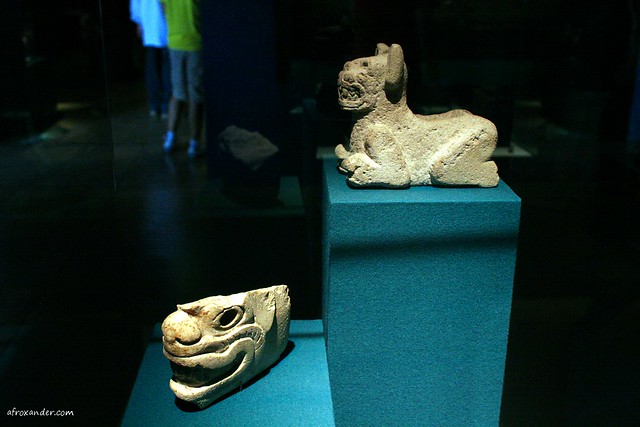
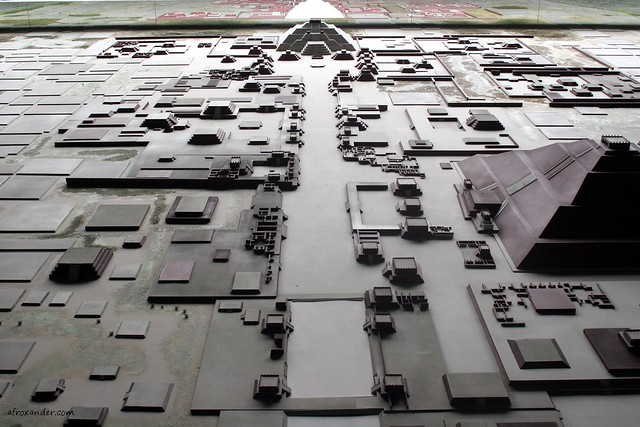
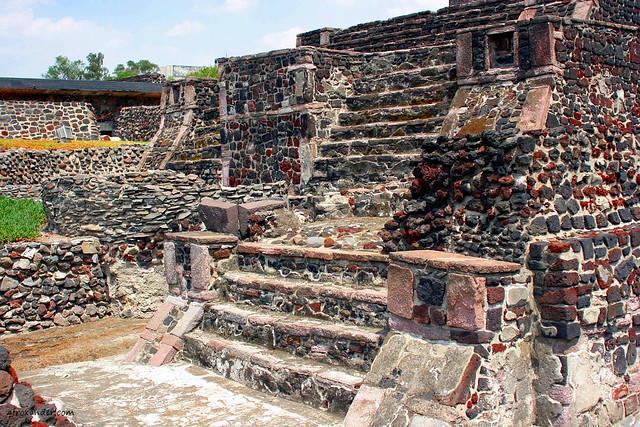
I skipped the last day of the Vive Latino festival for good reason: to take a trip to the city of Teotihuacán de Arista. The city is home to the Pre-Hispanic City of Teotihuacán, an ancient, Pre-Colombian city important to the Mayans and Aztecs such as the Nahua, Otomi, and Totonac people of southern Mexico (the exact information is still debated by scholars).

The ancient city includes many large and important structures such as the Avenue of the Dead (Calzada de los Muertos), the Pyramid of the Sun (Piramide del Sol), Pyramid of the Moon (Piramide de la Luna), and many others.

Unfortunately, my trip was cut short by a sudden and powerful thunderstorm that occurred the moment I step foot on the summit of the Pyramid of the Sun.

Below are some photos of my journey from Mexico City to Teotihuacán. The full set can be found HERE.

teotihuacan_006

teotihuacan_009

teotihuacan_013

teotihuacan_015

teotihuacan_017

teotihuacan_019

teotihuacan_020

teotihuacan_025

teotihuacan_026

teotihuacan_030

teotihuacan_033

teotihuacan_037

teotihuacan_039

teotihuacan_049

teotihuacan_051

teotihuacan_055

teotihuacan_056

teotihuacan_058

teotihuacan_061

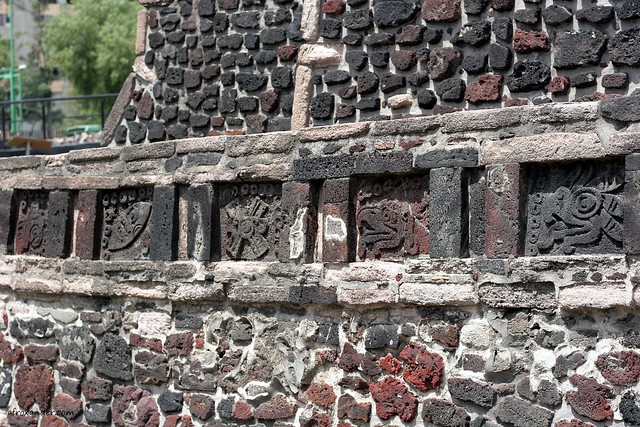
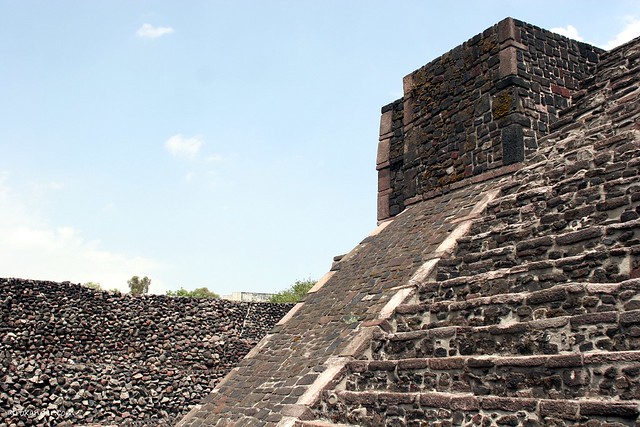
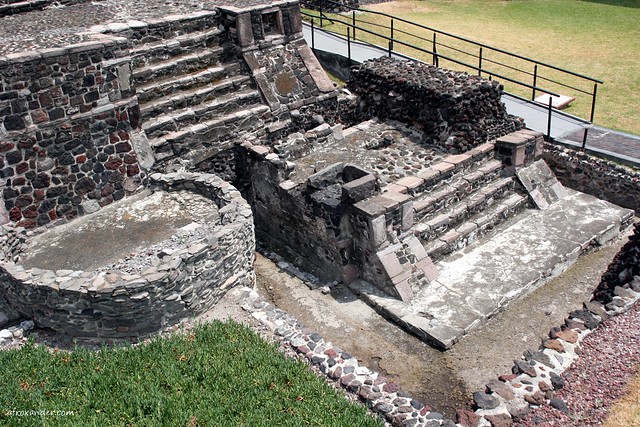
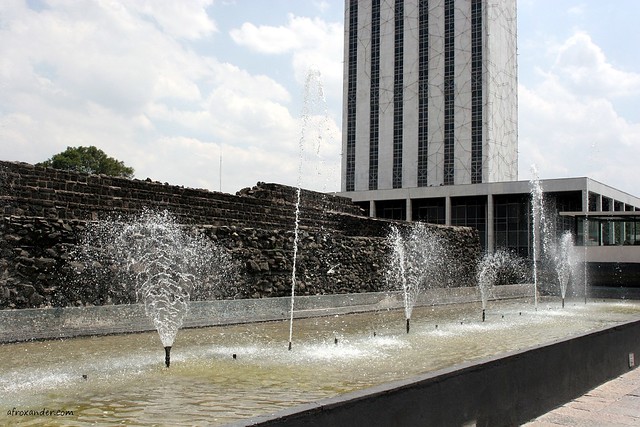
Tlatelolco & the Plaza De Las Tres Culturas (The Square of Three Cultures)

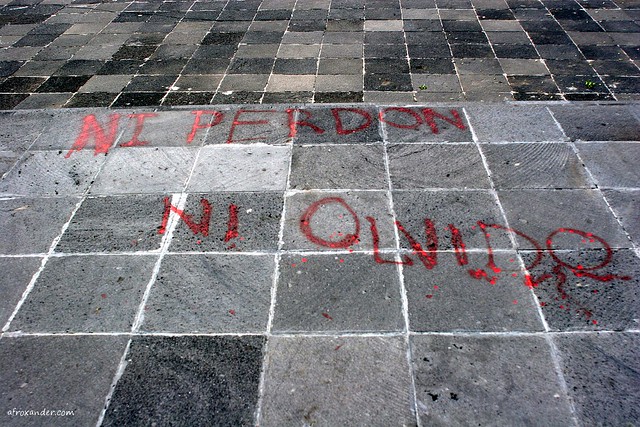
The Plaza De Las Tres Culturas in the Mexico City neighborhood of Tlatelolco is one of the most important historical sites in the country. The site is known by that name because it is home to the three cultures of Mexico: Indigenous, Spanish, and Mestizo (Native & European descent). There’s a large stone slab that marks the area as the “painful birthplace” of Mestizos and, thus, the birthplace of modern Mexico.

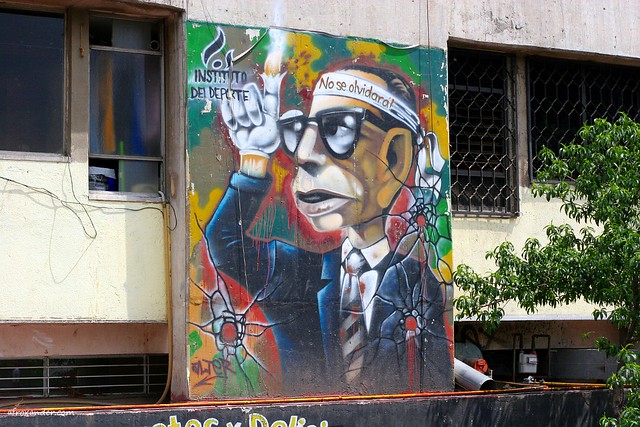
It’s also the site of Tlatelolco Massacre of 1968. Thousands of students convened at the plaza on October 2nd of that year to continue their protests against the policies of president Gustavo Diaz Ordaz and the PRI. Military snipers fired at their own servicemen in order to provoke their attack on the protestors. The exact death toll is still unknown but numbers vary between 30 to over 300.

I spent a few hours at the site shooting photos. Click here for the full set and a few of my favorites below:

tlatelolco_002

tlatelolco_009

tlatelolco_012

tlatelolco_020

tlatelolco_025

tlatelolco_031

tlatelolco_036

tlatelolco_040

tlatelolco_047

tlatelolco_049

tlatelolco_056

tlatelolco_065

What’s A Superclásico? Football Rivalries In Latin America

I’ve been working on a monthly column for Remezcla titled Your Guide to Clásicos De Fútbol Rivalries. Since February, I’ve been writing about the rivalry between a pair of teams in Latin America (with one exception for the FC Barcelona/Real Madrid F.C. rivalry in Spain) and delve into their history, crazy fans and more.

The archive of stories can be found HERE and so far include:

  1. FC Barcelona vs. Real Madrid F.C. (Spain)
  2. Atlético Independiente vs. Racing Club De Avellaneda (Argentina)
  3. Chivas vs. América (Mexico)
  4. Flamengo vs. Fluminense a.k.a. Fla-Flu (Brazil)
  5. Nacional vs. Peñarol (Uruguay)
  6. Boca Juniors vs. River Plate (Argentina)

I still have PLENTY of more rivalries to write about. My next column will focus on a rivalry from Costa Rica in anticipation of this month’s CONCACAF Champions League match between LA Galaxy and C.S. Cartaginés in L.A.

The Road To Machu Picchu: Day Four

The Road To Machu Picchu is a four-part series that chronicles my exploits travelling form Cusco, Peru to the mountain of Machu Picchu, an ancient site built by the Incas that is preserved and protected by the government of Peru and UNESCO as a World Heritage Site.

Also read Day One, Day Two, and Day Three.

My alarm went off at 4:30 a.m. My things were packed and my change of clothes waited for me on my backpack. My group met downstairs in the lobby at 5 and we walked for a few minutes in the darkness to the bus station where we, along with hundreds of other tourists, were to catch one of many buses up to Machu Picchu. The thought of hiking to the entrance came across no one’s mind that morning for obvious reasons.

The ride up the hillside was a calm and soothing one. Our bus made its way up the road that snaked up the hillside of Machu Picchu with dawn’s first light following close behind.

It was sunny and slightly warm when we disembarked at the top of the mountain near the entrance to the city. There was already a long ling of tourists when we arrived.

machu_huayna_034
The entrance to Machi Picchu
machu_huayna_035
Plaques commemorating Hiram Bingham who discovered the site and the indigenous families who lived on the site who aided Bingham

There are a number of large plaques mounted on the stone walls just past the modern entrance (the one you see pictured above) of the city of Machu Picchu that commemorate the area as a UNESCO heritage site as well as the exploits of Hiram Bingham III. Bingham learned about “lost” Incan cities while a lecturer at Yale and is credited with finding Machu Picchu in 1911 with the aid of families who lived in the area.

machu_huayna_036
More official plaques!
machu_huayna_037
Behind the facade of this innocent-looking tower lies….

Continue reading “The Road To Machu Picchu: Day Four”

The Road To Machu Picchu: Day Three

The Road To Machu Picchu is a four-part series that chronicles my exploits travelling form Cusco, Peru to the mountain of Machu Picchu, an ancient site built by the Incas that is preserved and protected by the government of Peru and UNESCO as a World Heritage Site.

Catch up on Day One and Day Two.

Day three began with the realization that Viracocha was out to get me. The Incan rain god followed me to Santa Teresa and, once again, poured buckets of rain overnight. This wouldn’t have been a problem had I not hung one of my shirts on a clothesline to air out the stench of nicotine attached to it after a night out on the town. Luckily, Viracocha showed some pity and the rain stopped around sunrise. I had just enough time before breakfast to dry the shirt to a “slightly moist” level.

After breakfast, our group split in two and we each headed to different directions for the same exciting purpose: ziplining! We went to a park run by Canopy Peru/Cola De Mono for the excursion. We hiked up to the top of a hill where the first of six ziplines awaited us. I’ll let the picture and videos describe how it happened (I suggest turning the volume down, ziplines are pretty loud!):

machu_huayna_029
View from the third zipline

Continue reading “The Road To Machu Picchu: Day Three”

The Road To Machu Picchu: Day Two

The Road To Machu Picchu is a four-part series that chronicles my exploits travelling form Cusco, Peru to the mountain of Machu Picchu, an ancient site built by the Incas that is preserved and protected by the government of Peru and UNESCO as a World Heritage Site.

Catch up on Day One.

I awoke early Sunday morning thanks to the machine-gun patter of raindrops crash-landing around me. Damn, I thought, I should’ve showered last night. The restrooms were outdoors in a separate area and two of the three showers available were showerheads installed in rectangular grass huts. I fell asleep again with visions of my flip-flops splashing through mud puddles on my way to and from the outdoor showers.

I awoke again a few hours later to an overcast but rainless sky and immediately took advantage of the situation. One cold, refreshing shower later and I was ready for breakfast.

Day two of the tour began with a lesson about some of the local critters, pictured below.

machu_huayna_016
This little guy hated our guide Ricardo
machu_huayna_017
A “jungle rat”
machu_huayna_018
This dude loves to eat
machu_huayna_019
He also hated Ricardo’s backpack

Afterwards, Ricardo informed us of the day’s activities: hiking, hiking, hiking, and hiking ending with a dip at the Aguas Termales (hot springs) of Cocalmayo and dancing at a nightclub or two (assuming one could still walk after a day spent hiking) at Santa Teresa.

Ricardo also gave us a lesson about achiote (bixa orellana), a plant native to tropical regions in America. The plant has a number of food and medical uses including sunblock. Ricardo opened a few seed pods, ground the berries into a paste in a small bowl and painted each of our faces with some Incan (and some not-quite-Incan) designs.

machu_huayna_020
Facepaint and sunblock in one!

Continue reading “The Road To Machu Picchu: Day Two”

The Road To Machu Picchu: Day One

The Road To Machu Picchu is a four-part series that chronicles my exploits travelling form Cusco, Peru to the mountain of Machu Picchu, an ancient site built by the Incas that is preserved and protected by the government of Peru and UNESCO as a World Heritage Site.

My Machu Picchu adventure began in the city of Cusco on the chilly Saturday morning of October 12th. The city is a huge tourist destination thanks to its proximity to Machu Picchu and architectural heritage. Many pre-Colombian streets and buildings are still in use today such as various Incan ruins and a small alleyway known as Loreto where one can touch the foundation of a building laid down by Incans centuries ago.

My friend and I woke up incredibly early, grabbed our bags and were escorted out the door by our Couchsurfing host Willy. Willy helped us set up our trip to M.P. through the Inka Jungle Trail, a four-day, three-night hike from Cusco to Machu Picchu and back. Luckily for us, our host was also an employee of a travel agency and took care of everything we needed for our trip other than the fee.

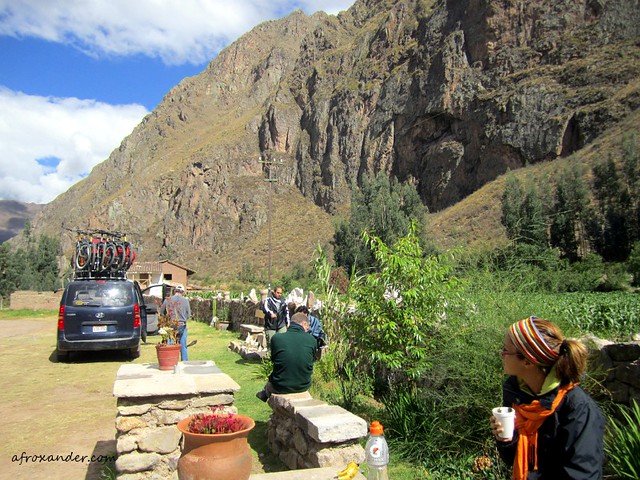
We met our tour guide Ricardo who introduced us to our group before we hopped in the van and took off to the town of Ollantaytambo.

machu_huayna_001
Ollantaytambo, Peru

Continue reading “The Road To Machu Picchu: Day One”