

Check out my first piece for Noisey (Vice’s music section): Lila Downs, Death, and Celebrity Gravestones at Hollywood Forever’s Dia de los Muertos.
Check out my first piece for Noisey (Vice’s music section): Lila Downs, Death, and Celebrity Gravestones at Hollywood Forever’s Dia de los Muertos.
Matías Almeyda, nuevo entrenador/técnico de Chivas de Guadalajara, explica sus ideas fútbolisticas.
En tres partidos, Almeyda y las Chivas cumplen con tres victorias de 2 – 1 incluso a una victoria contra las Águilas del América, el eterno rival de las Chivas.
Major League Soccer’s 2015 season is set to kickoff in exactly two weeks but there’s a chance first kick will be delayed indefinitely. The league and the MLS Players Union are currently sitting with a federal mediator in order to update the Collective Bargaining Agreement (CBA) between the two, which expired at the end of January. Members of the MLSPU have threatened to go on strike if both sides are unable to reach an agreement.
Should we get to a point before the season where things and negotiations aren’t where they should be, we are ready to strike, and we are united as a group to make real progress in terms of the way players get treated in this league.
I think at this point a strike is imminent if we don’t get what we want.
What the players want is free agency and they’re now at the point of putting the league and their careers on hold in order to get it, as the quotes from Bradley and Evans illustrate. MLS is a special type of beast in the soccer world (along with Australia) in that it’s a closed, single-entity system in which the league itself dictates everything. Teams aren’t owned and run separately but run by league “investor-operators.” As such, player contracts are also owned by the league and not individual teams.
Here’s how Mike Jarosi explains it:
Insiders, and the attorneys, call the MLS structure “the budget” and the players’ projected compensation “the budget number.” This accurately reflects the compensation structure. That is, MLS LLC determines (as part of the collective bargaining process) how much it will spend on player compensation, and allocates that amount for each investor/operator to assign to its players (I will not muddy this piece with the “designated player” structure). MLS LLC then pays the players.
That’s only the tip of the iceberg. MLS’s structure dictates that all players are employees of the league and not the team they play for. As such, there are a number of rules and regulations in place that any foreign player would deem arcane and ridiculous.
Consider the case of Herculez Gomez who I wrote about last month in Remezcla:
Gómez cut his teeth in MLS up until 2009 when he left Sporting Kansas City (then the Kansas City Wizards) and the USA to sign with Puebla F.C. in Mexico following a dispute with then-coach Peter Vermes. Gomez has expressed a desire to return to MLS, but continues to be hindered by one important limitation: the fact that Kansas City controls his rights to play in the league under the right of first refusal. Gómez’ career in the US is at the mercy of a team he hasn’t played with in seven years.
His current situation is similar to that of Jean-Marc Bosman. Bosman’s career, however, took a very different and deeply influential turn as Scott Nicholls details in Prost Amerika:
Bosman was playing for Belgian club FC Liege when his contract ran out in 1990. He wanted to play for Dunkirk in France but in an effort to keep Bosman at Liege, the team slapped a huge and unrealistic transfer “fee” on his head, despite being out of contract. This ultimately deterred Dunkirk because they could not afford the transfer fee.
The case of Union Royale Belge des Sociétés de Football Association ASBL v Jean-Marc Bosman changed modern football. The member nations of the European Union (EU) had agreed on ‘free movement of labour’ as they strove towards a stronger economic union.
Bosman took the Belgian Football Federation to court for five years, claiming that as a citizen of the EU he could play wherever he wanted to because he should be allowed “freedom of movement” as any citizen in other occupations was guaranteed.
Every ruling was appealed, but in 1995 the European Court of Justice in Luxembourg ruled in Bosman’s favour. It was too late for Bosman, but the consequences of the case were much, much bigger regarding the development of world football.
Gomez is most likely not planning on taking MLS all the way to the Supreme Court anytime soon, if ever, especially since he’s been enjoying his time playing in his parent’s home country of Mexico. Bosman’s situation was also more complicated (he had to go to an international court, after all) but the basic idea, however, is similar. The MLSPU wants the league to incorporate free agency in order to give players the freedom to decide where to play with less restrictions and, thus, more control over their careers as players in the USA.
Free agency, however, would risk the very nature of the structure of MLS. Again, Mike Jarosi:
First, and simply put, free agency would just plain muck everything up: payroll, workers’ compensation payments, application of individual state laws versus a centralized system, etc., etc.
Second, it would shift the player compensation financial liabilities — and the accounting of the same — to the investor/operators (technically, the LLC “Members”). This, in turn, would affect the taxing structure and the revenue flow. Limited liability companies can elect to be taxed on a “pass-through” basis, which is a huge advantage.
Third, MLS has enjoyed 20 years of slow, steady growth. There are ways to increase player rights and compensation without free agency. Free agency would put the league in a position to seriously risk repeat of the NASL — spending itself out of existence in an arms-race for over-the-hill foreign players.
Most importantly, if MLS continues to shift its structure to where it looks like a duck, walks like a duck, and quacks like a duck, it’s probably not a single-entity LLC.
That last paragraph is very important. The incorporation of free agency would radically redefine what type of entity and structure MLS is and would open the metaphorical floodgates for further radical changes that could be enforced by the courts.
Chase Woodruff elaborates on this further in Eight By Eight:
The league contends that free agency could lead to out-of-control salary costs and hinder its ability to compete on the global transfer market, but its real concerns likely have to do with the battle that began in a Boston courtroom nearly twenty years ago. Since the Fraser ruling, it’s grown increasingly difficult to view the league as a single, unified organism, and not what it really is: a league like any other, composed of various constituent parts with diverse and at times conflicting interests. Over the past decade, the number of MLS franchises has close to doubled and continues to grow. Most clubs play in slick new soccer-specific stadiums, command millions in kit sponsorships and other commercial deals, and compete to sign high-priced talent from overseas through the Designated Player system. And in addition to run-of-the-mill American billionaires like Robert Kraft and Stan Kroenke, its “investor-operators” now include an Austrian energy drink company, a Brazilian venture capitalist, an Italian-Canadian dairy magnate, and the Abu Dhabi Royal Family.
Throw in free agency, with clubs bidding against one another for talent on the open market, and it becomes nearly impossible to consider MLS a single-entity. In the event of future antitrust litigation, the league’s single-entity defense might fall apart, and MLS players would gain the additional leverage of the so-called “nuclear option” to decertify their union and sue the league in court. Even other leagues, like the ambitious NASL, might sense an opportunity to follow in the footsteps of baseball’s Federal League and challenge MLS’ division-one status with an antitrust lawsuit.
There you have it. At stake here are the rights of US players to dictate their own careers clashing with the very structure at the core of MLS. But what are the odds of changes happening this year? The MLSPU has demanded free agency in the past but acquiesced for less, such as in 2010 when the league and the union agreed on the Re-Entry Draft and a number of other changes and improvements.
Noah Davis sees history repeating itself in favor of the league. From his piece in Grantland:
Still, if a players’ union was ever going to prevail against management, it seems like it should be the MLSPU in 2015. But it’s not likely to happen. Whether you talk to sources around the league or just think about the situation, you arrive at the same conclusion: Kraft needs MLS to play this season a lot less desperately than your average MLS player does. If MLS ceased to exist tomorrow, the owners would be disappointed. Portland Timbers owner Merritt Paulson would have to find someone else to get into Twitter fights with, but he would be just fine. The vast majority of the 500-plus players in the league, however, wouldn’t. They’d be out of jobs, unable to go to Europe or Mexico or anywhere else to play soccer professionally because they aren’t good enough or because those rosters are already settled.
The proposed strike also comes during a huge year for the league and the national team. The Gold Cup tournament will take place this summer, MLS will debut two new teams (Orlando City and NYCFC), and the league signed some very hefty TV contracts with ESPN and FOX Sports.
It’s impossible to know what will happen come March 6th, but if history does repeat itself, both sides will repeat the negotiation process of 2010 when the league and MLSPU arrived at a consensus two days before first kick. The MLSPU didn’t win free agency then but did win a number of concessions that gave them a bit more freedom.
The MLSPU will need its own Bosman ruling to eventually win this fight. Unfortunately for the players and the union, a ruling like that probably won’t happen for many years and many more CBA negotiations to come.
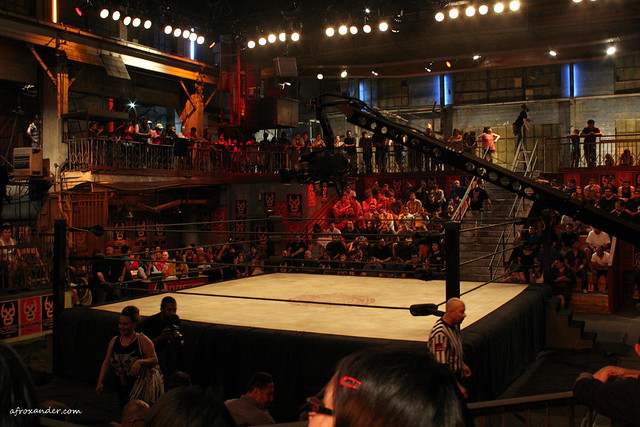
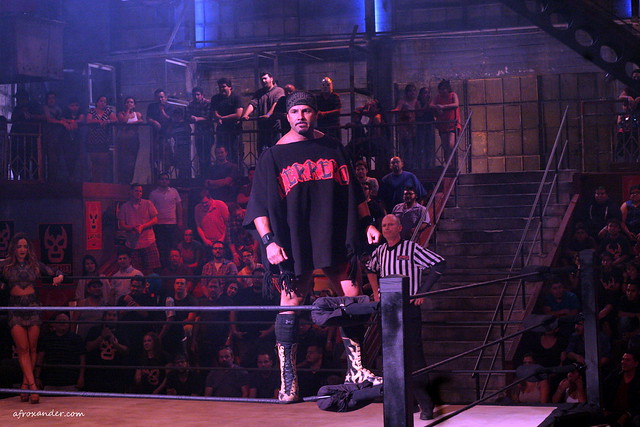
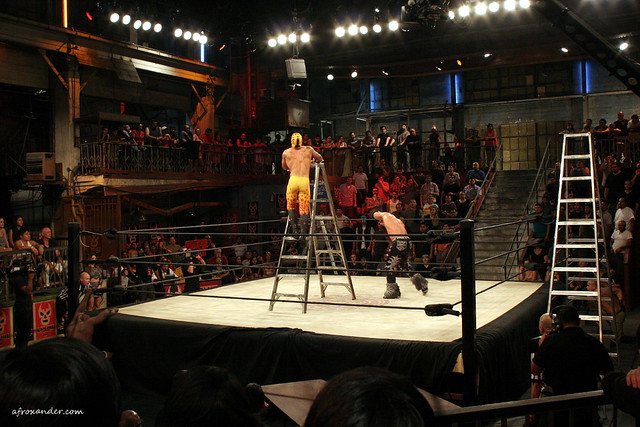
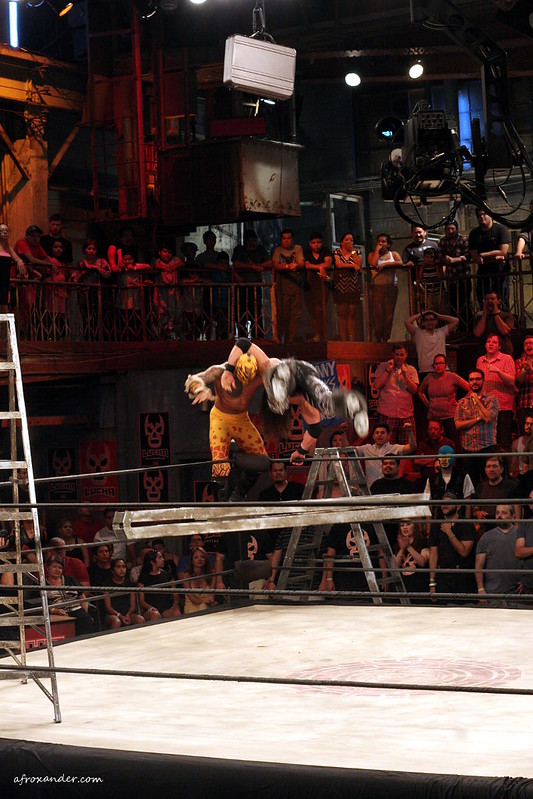
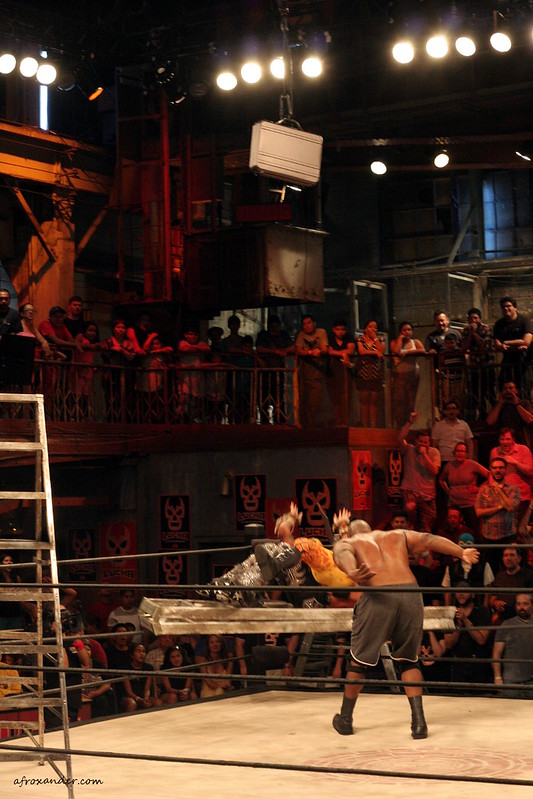
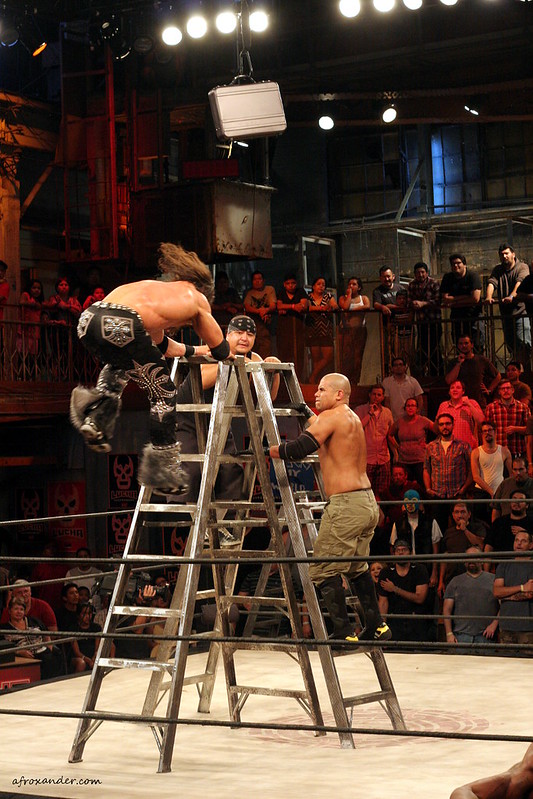
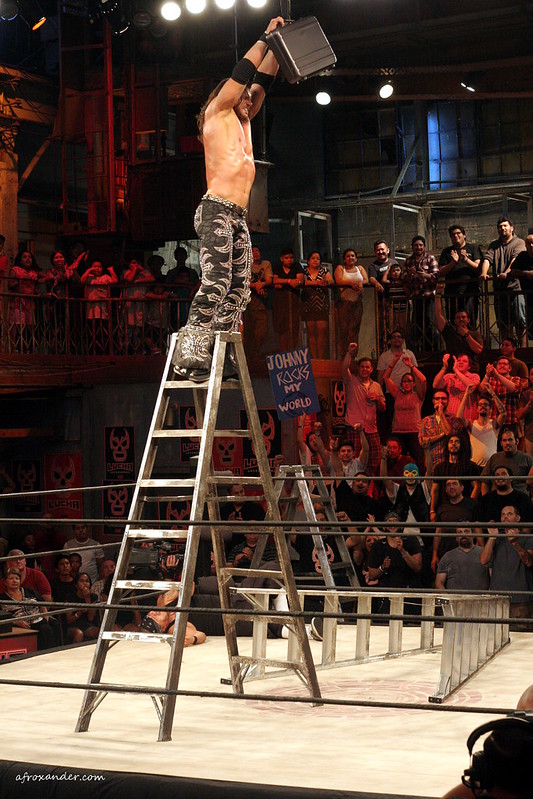
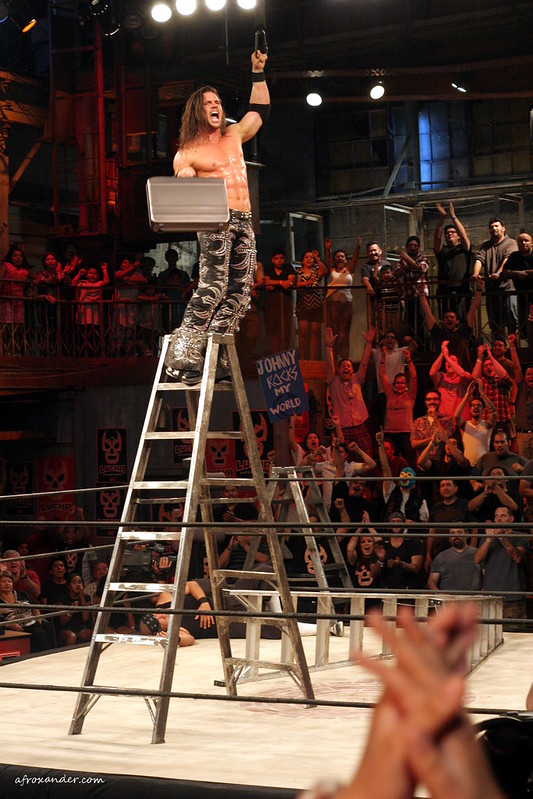
Back in early October, Remezcla sent me to a warehouse in Boyle Heights for a story. That warehouse turned out to be the set for Lucha Underground, a lucha libre show produced by the El Rey Network. There, the audience and I were treated to a 10-man battle royale and the company’s first ladder match. I had to wait until the episodes aired (Dec. 3rd & 10th) to share photos from the event.









A little over a month ago, Billboard announced a large bit of news: a partnership between Camilo Lara (a.k.a. Mexican Institute of Sound) and Toy Selectah (formerly of Control Machete) as Compass. The duo visited and recorded in seven different cities with a grand total of 90 collaborators for an album that will be released some time next year.
I actually spent a day at Red Bull Music Studios in Los Angeles this past summer while the duo worked on a few tracks. Below is footage I shot of Lara and Toy working with singer/musician Ceci Bastida on some vocals.
The duo will also tour the world together next year and will be part of Mexico’s Vive Latino festival.
A small group of protesters gathered outside of the Mexican Consulate in downtown San Bernardino to protest the kidnapping/disappearance of 43 student-teachers from a rural area in the state of Guerrero.










Back in 2012, I took a trip out to Machu Picchu in Peru. My group’s trek to the ancient city included a stop at Cola De Mono zipline near Santa Teresa. We had about an hour of time to kill before the employees returned from assisting the group before us and, somewhere along the way, my breakfast was ready to escape my intestines.
I walked around the large, outdoor waiting area and found the sign for the restroom. The bathroom was many feet away from the entrance facing the Sacsara river that borders the park on one side.
I walked over to a small paved area where a lone, single-person stall stood under the shade of a number of trees. Three of the stall’s sides were dressed in thin bamboo reeds and foliage and the entrance…had no door!
“Where’s the door?” I asked out loud to no one because everyone was near the entrance killing time by playing a bean-bag toss game. There was no door, no curtain, nothing to spare the world, especially the river of gorgeous, crystal-clear water, the view of my answering nature’s call.
I figured the bathroom was out of order but a flush of the toilet showed me wrong. Meanwhile, my stomach continued to warn me there’d be no chance of flying over the Sacsara on a zipline with irritable bowels (all those damn potatoes!).
So be it.
I sat down, pulled my pants down far enough and went to town.
There I was, sitting on and shitting in a toilet facing the Sacsara river, various exotic birds singing their songs amid the gentle rush of the running water, the cool mountain air doing its thing as the greatest air freshener money will never be able to buy.
It was the most unexpected place to find bliss.


I forgot to mention that I’ve been contributing there since March of this year. It all went down the same week as SXSW so things got a bit hectic.
Last year (almost a year to the day!), I wrote about chiptune fanatics using GXSCC to turn their favorite metal songs into chiptune/8-bit songs. It took a year but someone finally gave Radiohead the same treatment. YouTube user QuintonSong gave two of the band’s albums, OK Computer and Kid A, the chiptune conversion. Chiptuned “Exit Music (For A Film)?” Yes, please!!!
Many of my friends went out to USC for the big game against cross-town rival UCLA last night (USC beat UCLA 50 – 0). I’m not a fan of college sports but I do have a soft spot in my heart for USC.
I grew up in L.A.’s Pico-Union district of Central L.A. just two miles north of the campus, north of the I-10 freeway and a block or two away from Hoover St. The I-10 also serves as the border between Pico-Union/Central L.A. and University Park/South L.A. where USC is located.
Pico-Union is known for being the home of one of L.A.’s most notorious street gangs and for its large, mostly Mexican, immigrant population. Despite living in a crime-ridden, low income area, most of my memories of life in Pico-Union are happy ones.

 Afroxander (aka Iván Fernández)