Three Days A Volunteer At SoFi Stadium for Copa América 2024

I almost missed out on the Copa América this year. I attempted to sign up for a press pass as I normally do for a balompié tournament in the US. I say attempted because, unfortunately, the application page for credentials via CONMEBOL left me with more questions than answers I could provide to the ones listed on the request form.

As a friend of mine at ESPN noted: “dude it’s a mess lol – there’s gonna be mistakes and some angry people this summer haha.”

I’m not sure how many mistakes were made via the application…but there were plenty of questionable choices and decisions that the higher-ups at CONMEBOL made before and during the tournament, which resulted in the many ridiculous and/or terrible stories you may have already seen by now: from the insanely priced food served in the media press room at SoFi stadium to the horrifying scenes at the final in Miami.

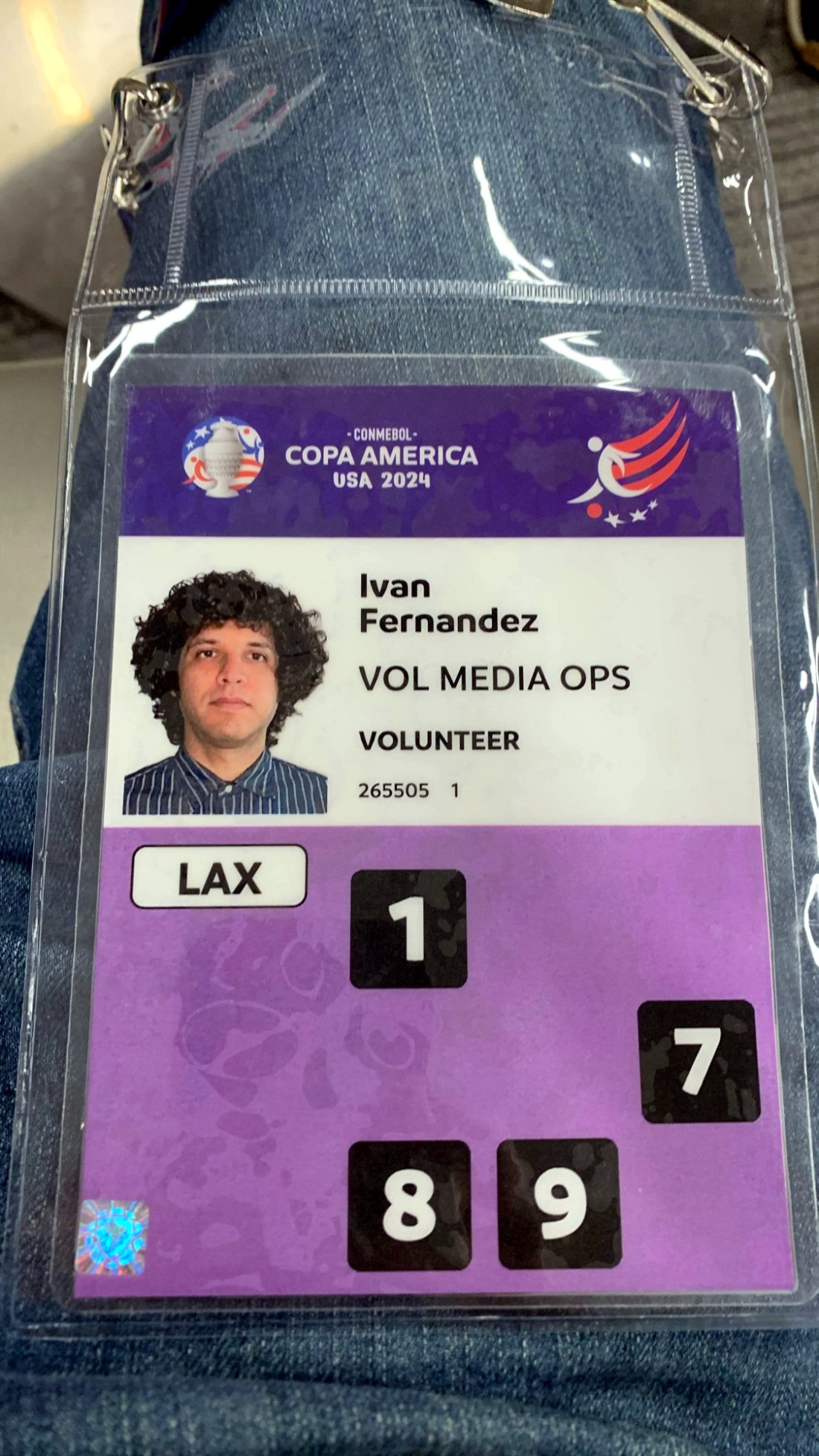
I witnessed the result of CONMEBOL’s questionable leadership first-hand, early-on in the tournament during my brief stint as an official volunteer for the Copa América 2024. A journalist friend of mine at the L.A. Times shared information on how to enroll as a volunteer at the tournament. It was my best chance to at least attend the two group stage games at SoFi Stadium in Inglewood.

View from VIP entrance 10 of SoFi Stadium adjacent to the YouTube Theater venue; a passenger plane flies in the sky.
View near VIP entrance 10 at SoFi Stadium, adjacent to the YouTube Theater.

The application for volunteers was mercifully easier to complete than the one for journalists. There were numerous categories listed for applicants to choose from depending on their skills and preferences. These were: Training Site, Competitions Support, Team Services, Antidoping, Security, International Relations, Commercial Operations, and Media Operations. The Media Operations option was divided into additional subcategories: mixed zone, conference analyst, press conference analyst, photo analyst, press conference support, and press tribune analyst.

Continue reading “Three Days A Volunteer At SoFi Stadium for Copa América 2024”
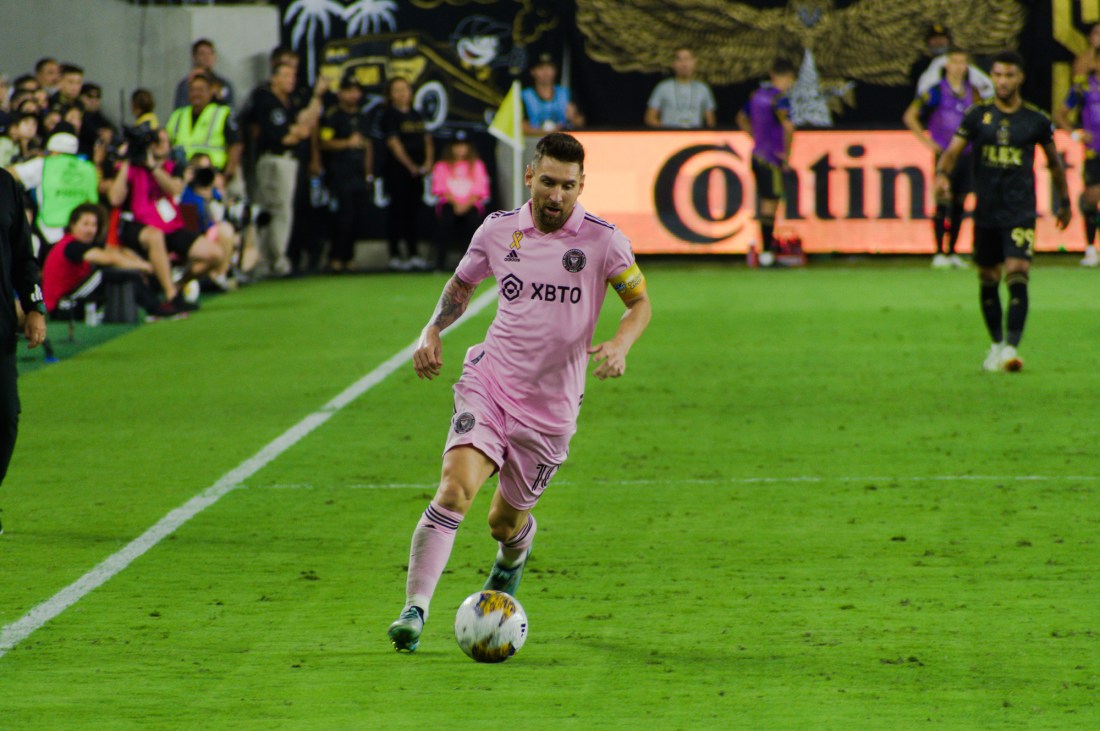
Messi League Soccer

Have y’all heard about this guy named Messi? He’s pretty good at this soccer thing.

Messi and Inter Miami came to Los Angeles over the Labor Day weekend and I got to witness it first-hand for LA Taco.

EXCERPT:

Although Messi had already been presented to the Inter Miami faithful during a tropical storm more than a month ago and made his sporting debut in the Leagues Cup against historic Mexican club Cruz Azul, it wasn’t until this game in Los Angeles that the full-weight of the moment came to fruition.

The new iteration of Major League Soccer, with an assist from tech and media giant Apple, as the beacon leading the world into the 2026 FIFA World Cup and the main competition with Saudi Arabia and the Saudi Pro League for players, fans, and soft power, was officially here and shepherding the new age of modern football.

Read it all here: https://lataco.com/messi-mls-history

50 Years of Coras USA

My latest article for KCET is available to read and enjoy. It’s a deep dive into Coras USA, aka Coras de Los Angeles, a local soccer team that existed for 50 years in southern California. The team was a cultural umbilical cord for Mexicans in Mexico and the US and later became a gateway for young players hoping to become professionals.

What began as a fun ritual for the weekend grew into a family legacy of community-building that lasted half a century. During its existence, Coras USA united working-class, immigrant families from Nayarit and other regions of Mexico in Los Angeles and provided youth players a pathway towards a professional career during its final years in the city of Riverside.

“Its original name is Deportivo Coras USA,” explained Lopez of the team founded by his father and uncles. “The first name that it had was Coras de Los Angeles. Along the years, it had a couple of name changes like Deportivo Nayarit [and] Deportivo Coras Nayarit. It’s always been Coras but it’s been known for Coras de Los Angeles because it branched out of Coras de Tepic.”

Read the story in full here: https://www.kcet.org/arts-culture/50-years-of-coras-usa-how-two-generations-built-community-with-soccer

Howler Magazine Returned in Time to Welcome Gareth Bale to Los Angeles

And that’s thanks to your truly! Yes, Howler has returned from the ashes in a web-only format for the time being and I was invited to write up a fun story about the most famous Welshman’s arrival to California.

For example:

[Imagine] Bale behind the steering wheel, his family in tow, checking his options on Google Maps as to whether he should take the 405 south to the 10 to the 5 or head further south on the 405 to the 91 to the 5.

Read the rest here: https://www.whatahowler.com/gareth-bale-in-los-angeles/

Why Did Soccer Fail In The U.S. When Other Sports Thrived?

Below is a link to a research paper I wrote last year that I’ve uploaded to my Academia page. It concerns research into the growth of gridiron football (NFL-style), baseball, and basketball in the US and why association football (a.k.a. soccer) failed to grasp the country’s imagination as the other three.

https://www.academia.edu/40016593/Why_Did_Soccer_Fail_In_The_U.S._When_Other_Sports_Thrived

An excerpt:

Most importantly, “the game in America badly lacked willful leadership…Plenty of athletic departments and administrators may have thought soccer was vaguely a good thing, yet none seemed to possess the eagerness and ambition to lift it to greater prominence” (Wangerin “Distant” 32).

The main issue facing the leagues across the nation was the lack of a governmental body to enforce a set of rules agreed upon by all. Leagues played according to their own sets of rules, which put them at odds with each other and the fanbases they catered to. A league in St. Louis, for example, “played halves of 30 minutes instead of 45” (Wangerin, “Soccer” 29).

The AFA, founded, ironically enough, by a group of British expatriates made the first to attempt to unify the country’s leagues in the late 19th century. Unfortunately, any and all attempts at unification became power struggles between British and American leaders of the sport who “engaged in petty rivalries and internecine organizational struggles that only helped to preserve their narrow fiefdoms and the status quo at the expense of creating an institutional structure that might have been able to disseminate the sport to the vast majority of the American public” (Markovits “Offside” 53).

Before the L.A. Galaxy, Chivas USA, or LAFC, We Had The Los Angeles Aztecs

I wrote about the Los Angeles Aztecs of the North American Soccer League (1970s) for L.A. Taco:

Aztecs-74-Road-Team-1

Perolli’s crew burned through the opposition, and won the Western Division Trophy. Weeks later, they won the NASL Championship Trophy after they defeated the Miami Toros (unrelated to the former LA/SD team) after penalties. It was the first time a professional soccer final was televised nationally in the United States.

“It was one of the most exciting games of the season,” says Gregory, “because we tied the game in the last minute, three to three.”

That debut season would be the only year that the Aztecs ever won a title. Their sister indoor squad didn’t fare any better as they won a single division championship in their final year, 1981. Gregory sold the team after the first season. He and Perolli accomplished the goals they set for that first year and he wanted to focus on his medical career.

“It grew so fast that it grew right out of my hands,” he remembers. “I was a doctor and I was actively practicing and I could never have handled it after that.”

Read the rest at L.A. Taco!

Delantero Sin Equipo: The Embarrassing Saga of Alan Pulido

Alan Pulido
Alan Pulido

There are easy ways and difficult ways for a football player to cut his teeth and cleats in Europe. Mexican forward Alan Pulido has chosen, to quote the ancient knight from Indiana Jones and The Last Crusade, quite “poorly” and has now placed his “current” club Levadiakos FC against his “former” club Tigres UANL in a legal battle over his contract.

At the heart of the matter, is Pulido who has claimed free agency since his return to Mexico from the World Cup in Brazil (as one of the substitutes.) The drama began on July 31st, 2014, when Pulido released a public statement that claimed he was no longer a player at Tigres and was actually a free agent. The announcement arrived days after he skipped a number of training sessions with the team. On August 6th, Tigres president Alejandro Rodriguez claimed/clarified that Pulido’s contract is binding until June 30th, 2016.

READ THE REST AT REMEZCLA

Fans Irate After ESPN2 Misses USMNT’s Opening Goal Against South Korea

The US national team started 2014 with a bang as forward Chris Wondolowski opened the match with a goal at the four-minute mark. Unfortunately, Team USA fans watching on ESPN2 missed it. The station continued to show the final minutes of college basketball match between Clemson and Florida State.

Seven minutes into the game and the station finally switched over. As you can expect, this didn’t sit too well with USMNT fans who watched the game on ESPN2.

https://twitter.com/chiieddy/status/429737193087987713

https://twitter.com/chiieddy/status/429738080355237888

https://twitter.com/lukeicejones/status/429745280268128257

https://twitter.com/deepblueseahors/status/429741056481964033

https://twitter.com/Mrs_Lady_B/status/429740456381915136

The game wasn’t a official FIFA matchday and not an incredibly important one in general besides it being a warm-up/team tweak for the World Cup. However, it’s a sad state of affairs at ESPN when a college basketball game is considered more important than a soccer game featuring the national team, especially in light of the team’s very successful 2013 campaign.

What does it mean when Spanish-language UniMas shows the same game from beginning to end when English-language ESPN doesn’t? This on top of the fact that ESPN/NBC lost viewers in its MLS coverage while UniMas actually gained viewers:

The Spanish-language audience on UniMas increased almost 6 percent from last year’s audience to 514,000 viewers, more than double what they were only three years ago on another Univision network, Galavision.

The numbers are consistent with the trend during the 2013 regular season. Univision reported that the average viewers on UniMas’ MLS regular-season broadcasts (223,000) topped those on ESPN2 (181,000).

Sports Business Daily had reported that the average viewership dropped 29 percent on ESPN/ESPN and 8 percent to 112,000 on NBCSN (which had benefited in 2012 from usually high viewerships due to lead-ins from its London Olympics coverage).

Courtesy Soccer America.